-

What varieties of flowering plants have prickly stems?
Whenever people hear about prickly flowers, most likely their first thought is "rose." In fact, besides roses, many other plants in nature are prickly too. Let's take a look below at what other varieties of prickly flowers there are. As the representative of prickly flowers, the rose is loved for its elegant bearing and
-
What are the causes of black stems in rose bushes?
Roses, known as the "queen of flowers", often cause troubles for flower enthusiasts due to the phenomenon of "black stems" during the process of their
-

Feng Shui meaning and symbolism of Spiraea thunbergii, plus an analysis of how long cut stems last in a vase
Spiraea thunbergii (bridal wreath spirea) is a plant that represents the joy of a bountiful harvest, so many people keep a bunch of it at home. It is also very drought-tolerant and is a flower material exclusive to winter; with good care, its vase life can last as long as one month. Its flower meaning is "dead wood meets spring," foretelling that life will become very beautiful. Among the many woody branch plants, Spiraea thunbergii has
-

The 3 simplest steps for propagating Phalaenopsis orchids by cuttings: how to cultivate the cut stems this way
Everyone knows the Phalaenopsis orchid has beautiful flowers, so buying them at a flower stall is relatively expensive. As a qualified flower-growing enthusiast, of course you want to know how to endlessly replicate more Phalaenopsis orchids, so quite a few flower lovers wonder: can Phalaenopsis orchid stems be grown from cuttings? The following article will explore the question of propagating Phalaenopsis orchids from stem cuttings, looking at it from a flower-growing perspective.
-

Why doesn't a clivia bloom when its leaves and stems are growing well?
The clivia's leaves and stems are growing quite well, but it just won't bloom. What's the reason?
-
A Detailed Explanation of the Formation Process of Young Cactus Stems
Cacti bear little resemblance to ordinary terrestrial plants. They have no leaves, and their spindle-shaped or warty bodies are vastly different from the branches of ordinary plants. However, a few cacti, besides having typical cactus flowers, also produce common young stems and leaves, such as Pereskia. This genus consists of many-branched shrub-type or small tree-type plants. The young stems are round and slightly fleshy. Generally speaking, the lateral buds of flowering plants are borne in the leaf axils, and most of them merely become small buds without further growth. But in many plants, at least some of the lateral buds grow into short, slender shoots, such as those of <span style="color:#FF8000;">apple</span> trees and pear trees. On these young shoots, the new leaves are almost all borne at a single point . This point is remarkably similar to the areole of a cactus, because the spines of a cactus are in fact its modified leaves. </p> <p align="center"> </p> <p align="center"> Pictured: young cactus stem </p> <p>   In fact, some plants do have leaves modified into prickles, such as Berberis, in which transitional forms ranging from leaf-like spines to prickles have been found. Botanists call these modified leaves and buds prickles rather than spines (only bud-derived structures are called spines, such as those of Rubus). The spines of cacti are also formed by the modification of leaves, so the botanically correct term is also prickles. However, this book still refers to them as spines according to customary usage. When new shoots or flower buds emerge from an areole, it clearly demonstrates that the areole does indeed contain buds. Theoretically, every areole is capable of producing new shoots. If the new shoot above any areole is removed, a new shoot will emerge from that areole to replace the removed one. </p> <p>   The leaves of some Pereskia species have become very small and narrow. The genus Opuntia also has leaves, which are round but soon fall off. The leaf-like basal segments of many Opuntia plants are easily mistaken for flat new leaves. In fact, when young, these cacti still produce small and feeble leaves; new stem segments emerge from the areoles on the leaf-like stem segments, while true new leaves are no longer produced. </p> <p>   The round young stems of Pereskia often give rise to variants with hump-like, angular, or ridged stems. At this point, as the plant grows, the spirally arranged areoles become increasingly obviously arranged in longitudinal rows. The areoles of cacti with angular stems are also arranged spirally during their seedling stage. </p> <p>   The amount of water stored within the body of a cactus varies greatly with the seasonal alternation between rainy and dry seasons, and the ridged structure is particularly suited to this growth pattern. </p> <p>   When water is scarce in the dry season, the ribs become thinner; when water is abundant in the rainy season, the ribs thicken, yet the overall form of the plant does not change much. In other words, without any change in the plant's surface area, the internal water storage capacity differs greatly, like the bellows of an accordion. In contrast, the stem segments of pad-shaped cacti shrink irregularly when water is scarce. Moreover, the surface area of ribbed cacti is larger relative to the plant's total volume than that of other types (all green plants need a certain surface area to receive sunlight). </p> <p>   The number of ribs can increase to a great many. For example, many Trichocereus cacti bear a very large number of ribs, but the genus with the greatest number of ribs is Stenocactus, which can produce as many as 120 thin, cardboard-like ribs. The young stems of many climbing and epiphytic cacti are slender and long, slightly cylindrical, or bear only irregular hump-like protrusions. The thicker young stems bear ribs, and as the plant grows, these ribs eventually become thin and wing-like, which helps the plant grow healthily in a semi-shaded environment. Later, the three-winged stems eventually give rise to two-ribbed, leaf-like flat stems. </p> <p>   On many ribbed cacti, the protrusions on the ribs are more or less distributed in a hump-like pattern. If sunlight shines directly from above, the various protrusions will to some extent shade one another from the sun. Therefore, when the shape of the ribs is clearly distinguishable, one can see that the ribs are mostly arranged in a spiral. If the ribs are composed of isolated, unconnected warty protrusions, as in Rebutia or Mammillaria, then the spiral direction of the ribs is difficult to discern, and only chains of warty protrusions arranged in intersecting diagonal rows can be seen on the plant surface. As with the arrangement of leaves, the number of warty protrusions in each row is often 5, 8, 13, 21, 34... that is, each number is the sum of the previous two. This arrangement allows the warty protrusions to be distributed densely and evenly, and maximally ensures that they do not shade one another from the sun. </p> <p>   Cacti that bear large warty protrusions differ most in form from ordinary cacti. These warty protrusions superficially resemble leaves, as in Ariocarpus or Obregonia, but the warty protrusions bear an areole, and flowers can emerge from within the areole. Therefore, the warty protrusions are not leaves but part of the stem. On some small spherical or leaf-like cacti, such as Blossfeldia or Lophophora, the spindle ridges can only be identified by the arrangement of the areoles. </p> <p>   Recommended articles: </p> <p>   The External Structure and Morphology of Cacti </p> <p>   An Evolutionary Overview of the "Living Fossil" Cacti </p> <p>   Cacti Shed Their High-Priced "Outer Garment" and Are Replaced by Low-Priced Ones </p> <p>   In Summer, Small Potted Plants Are Sought After, and Cacti Rank at the Top </p>
-
Aftermath of irrigation suspension: Grain prices in Taoyuan, Hsinchu and Miaoli hit bottom; secondary-grade rice drags down non-irrigation-suspension premium rice; "one country, multiple systems" for grain prices leaves farmers suffering
Aftermath of irrigation suspension: Grain prices hit bottom! Secondary-grade rice from irrigation-suspension zones drags down premium rice from non-suspension zones; "one country, multiple systems" for grain prices in Taoyuan, Hsinchu and Miaoli leaves farmers complaining bitterly
-
What to Do When a Clivia Miniata Gets Stuck Flower Stems? The Latest Solutions Are Here
Clivia miniata is also known as sword-leaf stone garlic, large-leaf stone garlic, etc. It is a perennial herbaceous plant of the genus Clivia in the Amaryllidaceae family, native to southern South Africa, with very high ornamental value. In China it is often grown in pots in greenhouses for viewing. The so-called "stuck flower stem" refers to the phenomenon in which, when the Clivia miniata sends up its flower stem, the stem cannot emerge and is trapped inside the rosette when it blooms. Now let us take a look at what to do when a Clivia miniata gets a stuck flower stem!
-
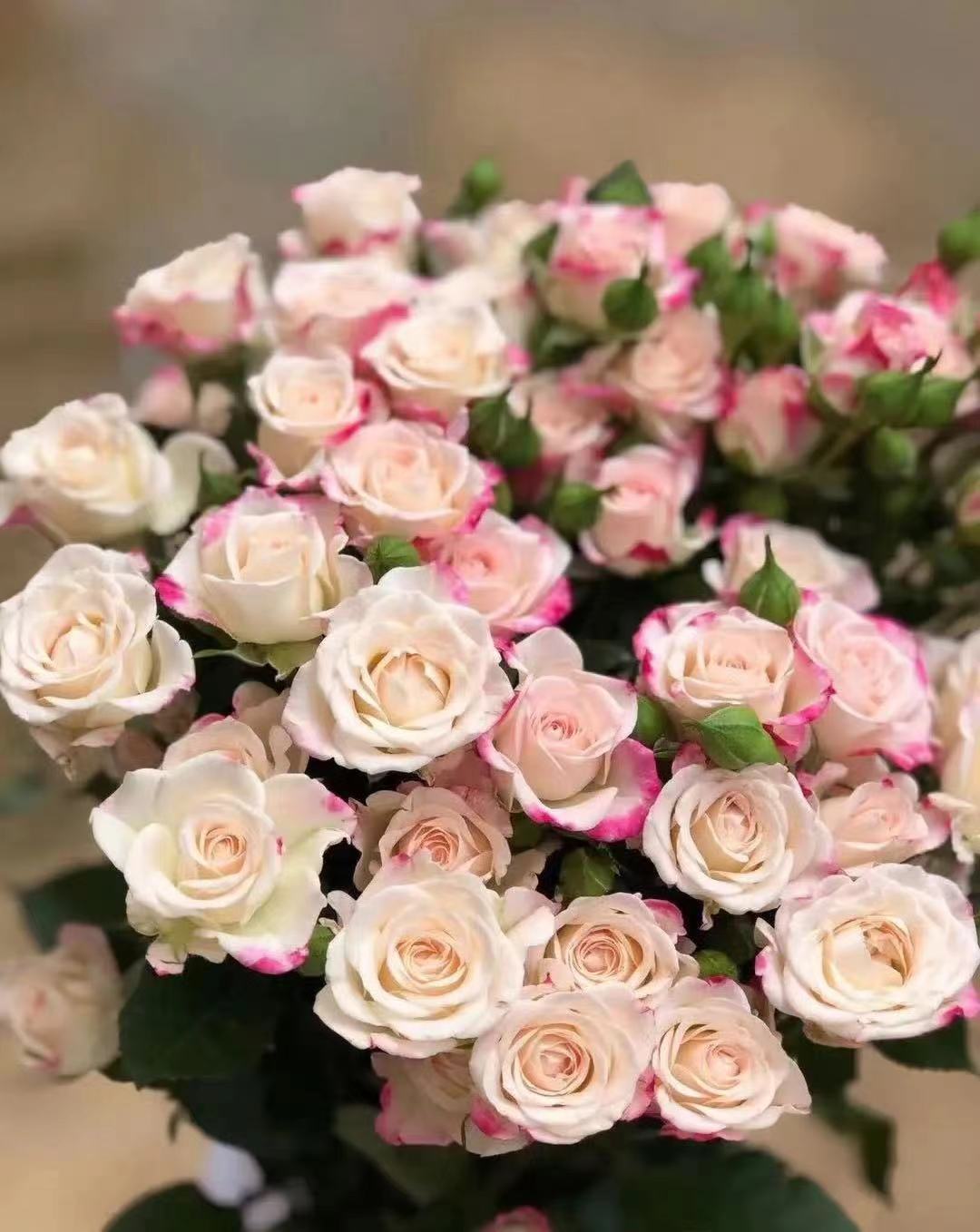
The Latest Pink Rose Meaning and What Different Numbers of Stems Represent
The pink rose is a type of rose native to warm and tropical regions, usually used for brewing tea or for medicinal purposes. The pink rose flower meaning includes being moved, a declaration of love, keeping someone in your heart, and first love. It originated in our country and has a long history of cultivation. Below, let us take a look at the pink rose flower meaning and what different numbers of stems represent.
-
What are the growing habits of chrysanthemums? A complete guide in one article with the latest detailed explanation
In winter the stems of chrysanthemums wither, and they overwinter by their perennial roots, while the rhizomes continue to develop underground. After the beginning of spring, buds sprout at the stem nodes near the roots, and as the stem nodes elongate, many fibrous roots grow densely at the base. Growth is slow during the seedling stage; after the seedlings reach 10 cm in height, growth speeds up, and at 50 cm
条件筛选