-

Pre-sowing treatment methods for licorice seeds
Treating Chinese medicinal herb seeds before sowing plays a major role in preventing and controlling pests and diseases, increasing the germination rate, and achieving uniform, complete, and vigorous seedlings. It is the primary prerequisite for stable and high yields, and can generally increase yields by 5%-20%. The treatment methods for licorice seeds are described below: licorice seeds have a thick and hard seed coat, making it difficult for the seeds to germinate. The seed coat can be broken by 3 methods: 1. Use a rice milling machine's high-speed rolling to make the seeds rub and collide with each other, damaging the seed coat (suitable for treating large quantities of seeds); 2. Mix the seeds with coarse sand and grind together for 5-10 minutes (suitable for treating small quantities of seeds
-
What are the pre-sowing treatment methods for Panax notoginseng seeds?
Panax notoginseng seeds do not store well. If longer storage is needed, storage in moist sand is best, but no more than 90 days is advisable. Mix 1.5% polyoxin at 200 times dilution + 58% ridomil at 500-800 times dilution + 70% thiophanate-methyl at 800 times dilution evenly, put the seeds in, soak for 20-30 minutes, then remove and air-dry and sow with the pesticide coating. Note that during soaking the liquid must completely submerge the seeds.
-
Detailed Guide to Straw Mushroom Sowing: Key Points on Sowing Time and Methods
1. Sowing period. When using a sun-heated bed for cultivation, the bed should be prepared in advance and covered with plastic film in May. The specific sowing period should be determined by the bed temperature, which should generally reach a stable 22°C or above. Sowing cannot be done if this is not reached. In central and southern North China, sowing is generally done in late May or early June. 2. Sowing rate. Generally, each square meter of sun-heated bed can take 15-20 kg of rice straw or 15-25 kg of cottonseed hulls, with the spawn amount being 6-8% of the weight of the cultivation substrate, that is, 1.2-1.5 kg of spawn per square meter. For first-time cultivation, the spawn amount should be appropriately increased
-
Land preparation and sowing methods for spring sesame and summer sesame
Spring sesame should adopt the "plowed furrow slice" method. The so-called "plowed furrow slice" means that after the previous crop is harvested, fertilizer is applied, the soil is plowed and harrowed, and then sesame is sown. The advantages of "plowed furrow slice" are: it can turn the soil and loosen it, increasing soil temperature; bury the base fertilizer, improving fertilizer efficiency; reduce weeds, making intertillage convenient; and the soil has good aeration, which can improve the soil's water storage and fertilizer retention capacity. Therefore, planting "plowed furrow slice" sesame is a key measure for increasing yield. For summer sesame, "iron stubble" sowing should be advocated, with rough sowing and careful management. "Iron stubble" sowing means that after the previous wheat crop is harvested, there is no further plowing, plowing or harrowing; as long as it is raked
-
Detailed Explanation of Autumn Potato Sowing Methods and Technical Key Points
1. Whole-tuber sowing: The sowing period for autumn potato cultivation falls in the high-temperature, rainy season of August. Cutting seed potatoes into pieces for sowing easily leads to tuber rot and dead seedlings. Using whole-tuber sowing can reduce tuber rot and dead seedlings in autumn, prevent degeneration, and increase yield. Seed potatoes for autumn sowing should be small tubers of about 50 g that were harvested early from spring seed potatoes and carefully selected. These tubers should be undamaged, disease-free, with bright skin color and moderate size. About 200 kg of seed potatoes are needed per mu. During autumn sowing, the seed potatoes are in a dormant state. Before sowing, they should be sprouted or soaked in a chemical solution to promote sprouting. Generally, 5 days before sowing, soak them in a 15-20 mg/L gibberellin solution for 20-30 minutes, remove them, and bury them in wet sand to promote sprouting. Sow when the sprouts reach 1-2 cm in length.
-

How to plant crape myrtle seeds? Detailed explanation of sowing methods and steps
How to plant crape myrtle seeds
-
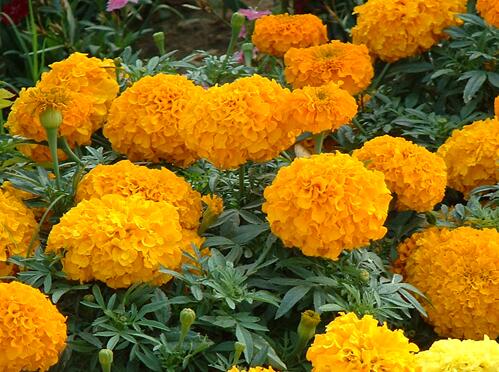
How to propagate marigolds? Detailed explanation of seed sowing and cutting propagation methods
Marigolds can be propagated by cuttings in summer; they root easily and grow into plants quickly. Cut 8-12 cm young shoots from the mother plant as cuttings, remove the lower leaves, insert them into the potting soil, 3 plants per pot, water thoroughly after inserting, shade slightly, and they will root after 2 weeks. Then, gradually move them to a sunny spot for routine care
-

-
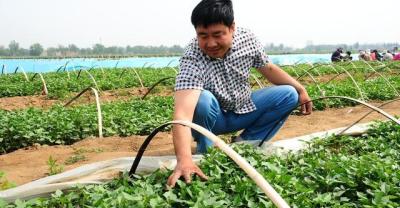
How to Grow Chinese Mahogany (Toona sinensis)? Detailed Explanation of Sowing Methods and Cultivation Techniques
Chinese mahogany (Toona sinensis), also known as Xiangchunling, Xianglingzi, Chinese mahogany sprouts, etc., is a plant of the genus Toona in the Meliaceae family. The tender buds of the Chinese mahogany tree have long been called "vegetables on the tree" and have heat-clearing...
-

A Detailed Guide to Rose Seed Sowing Techniques and Care Methods
Rose Seed Sowing Techniques and How to Care for Roses
条件筛选