-

What are the propagation methods for orchids? Beginners can master them easily too
Shen Yuanru, "Orchids," Part Twelve: Orchid Propagation Methods (1). Orchid propagation falls into two types: asexual and sexual. Propagation using part of the vegetative body is called asexual propagation; propagation using seeds is called sexual propagation. In China, the division method within asexual propagation has traditionally been most commonly used, while sexual propagation, due to the pollination, seed collection, sowing, and seedling raising process...
-
A Detailed Explanation of Orchid Cultivation and Management Methods
Shen Yuanru, "Orchids," Part 16: Orchid Cultivation and Management (1) All orchids in horticulture are wild orchids that have undergone long-term artificial domestication and been developed into many horticultural varieties. Because the species differ, each has different cultivation methods; and because the places of origin, ecology and habits of the various types of orchids differ, in the process of cultivation, besides matching similar factors from their original natural environment, cultivation techniques also need to be studied. In order to give the broad masses of orchid enthusiasts and readers an overall concept of how to grow orchids well, so that they can quickly master it, this chapter introduces the key points of the general nature, cultivation and management of several major traditional Chinese orchids as follows: (1) Sites for Growing Orchids The original environment of terrestrial orchids is among mountain forests and secluded valleys, with high, open terrain shaded by trees all around, forming a humid microclimate with small temperature differences and clean air. After being introduced, domesticated and potted, they must have a certain similar environment before they can be cultivated into lush plants with abundant flowers. At present, with industrial development and urban modernization, and with greening work unable to keep pace for the time being, urban air is polluted by exhaust gases from factories and vehicles. Because of these factors, orchids grown in cities are generally not as robust as those grown in the suburbs; however, as long as the surrounding environment is improved and technical measures are strengthened, this can still be compensated for. In cities, if there are high walls and deep courtyards or open areas such as patios, these are relatively ideal sites for growing orchids. Whether planted in the ground or grown in pots, orchids should face southeast, so that they receive the morning sun early; when the sun is directly overhead at noon, they are shaded by reed blinds, with little effect; and when the sun sets in the west, they are blocked by high walls. If orchids are grown in pots on a rooftop or a balcony on an upper floor, in addition to shading above, hanging blinds should also be put up on the northwest side to prevent the slanting light of the setting sun from burning orchid leaves and roots. An orchid nursery can make use of the good natural environment at the foot of a mountain or among woods, but attention should still be paid to avoiding northwest evening sunlight and cold wind. Therefore, when building a nursery, walls or groves on the southeast side must be lower than those on the northwest side. The most ideal location for an orchid room should be in the rear half of the nursery or in a corner of the courtyard; such a layout is conducive to viewing. In short, when choosing a site for growing orchids, attention should be paid to the four points of receiving dew, avoiding the scorching sun, allowing ventilation, and avoiding smoke, only then does it meet the requirements. As for the grounds of an orchid nursery, apart from walkways, which may be paved with brick or cement for convenience of operation during work, everything under the shade frames should be spread with coal cinders, gravel, crushed stone and the like, so as to facilitate drainage and maintain a certain rise of moisture, while also reducing the growth of weeds and reducing opportunities for pests and mold to hide and multiply. (2) Open-ground Cultivation 1. Growing Orchids in the Ground under Tree Shade Use the sparse shade in front of a house, in a wall corner, or among the crevices of ornamental rocks in a garden to plant directly in the ground, but the original poor clay soil must be dug out and replaced with loose humus soil or good field soil. When winter arrives, spread some rice straw over the soil surface at the roots to prevent the orchid roots from freezing. If there is severe cold, straw blinds or other soft coverings should also be laid over the leaf clusters to prevent cold damage. Apart from the need to strengthen management and protection during the height of summer and severe cold, this kind of ground-grown orchid cultivation can generally be extensive and allowed to grow naturally, but it is limited only to coarse varieties without petal-type classification. Otherwise, if there is the slightest negligence and precious famous varieties suffer loss, that would truly be a pity. Only when the weather turns warm the following spring may the cold-protection coverings be removed. After growing for many years, as long as it is watered and fertilized at the proper times, its adaptability is still relatively strong, and it can bloom abundantly year after year, with delicate fragrance drifting far, truly a fine item for embellishing a courtyard. Through the ages in our country, men of letters have often described this, which shows that from ancient times to the present, because ground-grown orchids have much natural scenery and a unique elegant charm, they are deeply loved by the broad masses of people. However, when arranging ground-grown orchids, besides considering a quiet and secluded layout, one must also combine the habits of the various orchids, such as Spring Orchid preferring partial shade, Huilan Orchid preferring somewhat more sun, and Autumn Orchid, Cold Orchid, and Baosui Orchid being even less suitable for freezing, with the local climate when arranging them, otherwise all previous efforts may be wasted. 2. Pot Cultivation of Orchids This refers to growing orchids under shade frames. Potted orchids had best not be placed directly on the ground, because they are easily disturbed by pests and overgrown weeds; especially when the summer sun is scorching and ground temperature rises, or during thunderstorms and the plum rain season, damp heat rises even more, easily steaming and damaging orchid roots, and because the ground lacks ventilation, it is unfavorable for aerial root growth. If conditions are limited, an empty clay pot can be inverted on the ground and the orchid pot placed on top of it, to reduce the above effects. The most ideal arrangement is still to place them on orchid benches made of prefabricated wood or cement boards, which facilitates convection from top to bottom, continuously supplies fresh air, promotes orchid respiration, strengthens metabolic function, accumulates nutrients and energy and their manufacture, makes orchids grow robustly, and also avoids harm to orchid roots and leaves from ants, slugs and the like. In daily care, the outer rim of the flower pots should also be kept clean, which is both elegant and reduces opportunities for fungi and lower plants to multiply. (3) Indoor Cultivation The orchid room is mainly used for terrestrial orchids to overwinter. Because the places of origin and species of orchids differ, their habits also vary, so the time for bringing them indoors and the room temperature requirements during overwintering also differ. Generally speaking, terrestrial orchids can mostly be cultivated in the open as long as the temperature is not below 7-8°C. According to the custom in the Jiangsu-Zhejiang area, after "Lidong" (Beginning of Winter), first move indoors the Jianlan, Autumn Orchid types, Cold Orchid and Baosui Orchid, which require slightly higher temperatures; move some Spring Orchids and Huilan Orchids with flower buds to under the eaves or to sheltered places to avoid attack by early frost, which would affect flower bud development; after "Xiaoxue" (Minor Snow), gradually move indoors the potted orchids raised from pseudobulbs and thin, weak small plants (especially orchids of the pure-color petal type), placing them on orchid shelves near windows so they can receive sunlight; after "Daxue" (Major Snow), all potted orchids must be moved indoors for care. Before bringing them in, first wash clean the area around each pot, which can prevent mud from contaminating insect eggs and mold and also looks clean and elegant. Small pots and short plants go on the front row of the bench, large pots and dense orchid plants go on the back row, and each pot should be separated by some distance so that their leaf clusters do not touch one another; this facilitates sunlight penetration and ventilation and light transmission among the orchid clusters, which is beneficial to growth. During indoor overwintering management of terrestrial orchids, special attention must be paid to temperature and humidity. Generally speaking, room temperature should be kept above 7-8°C, and the most ideal is 10-15°C. Shortly after bringing them indoors, if the weather is not yet severely cold and freezing, the south-facing windows should be opened wide around noon, while only the small vent windows at the back may be opened, to facilitate indoor air circulation. In the evening, if room temperature is still above 5°C, it is only necessary to leave the windows ajar, or leave the front and rear small vent windows half open; if below 5°C, all windows should be closed to prevent mishaps. In addition to hanging a thermometer indoors to measure temperature, several water jars can also be placed as simple temperature indicators, which is both convenient and reliable. The method: if the water layer on the surface of the jars has not formed thin ice (commonly called chicken-claw ice, that is, a thin, sparse, intermittent layer of ice in the shape of chicken claws on the water surface), while it has already formed thin ice outdoors, then apart from opening the windows halfway around noon when the sun shines brightly to promote air circulation, at other times doors and windows should mostly be kept tightly closed to prevent cold air from entering. In short, whether or not thin ice has formed on the water surface in the jars is used as the standard for opening and closing doors and windows during the cold winter season. When the depths of winter arrive, apart from opening doors and windows slightly around noon on windless, clear days for a little air exchange, as soon as the sun begins to slant, doors and windows should immediately be tightly closed, and before evening a cotton cloth curtain should also be hung. If room temperature falls below 5°C, heating equipment must be set up. According to traditional folk methods, several charcoal-burning braziers made of molded charcoal dust can be placed indoors, or a coal stove with a chimney can be used for heating, because coal gas is extremely toxic to orchid plants. After the beginning of spring, the climate gradually turns warm. At noon on mild, sunny days, all doors and windows of the orchid room can be opened wide; around two o'clock in the afternoon, only half a south-facing window should be opened; and before nightfall everything must still be closed properly. If the outdoor temperature is 2-3°C, the south-facing vent window may be left ajar. During this period, the room temperature of the orchid room had best be kept at around 10°C, because if the temperature is too high, the flowers of "borrowed-spring bloomers" (that is, early-flowering varieties of Spring Orchid, which often bloom early because the room temperature is too high) are liable to wither early, or after leaving the room, when they encounter a cold snap in spring, the tender leaf clusters of Selaginella uncinata on the pot surface are liable to freeze. In early spring, spring cold still keeps attacking, and all tissues of the orchid feel the warmth of spring and their vital activity begins to stir; at this time even more attention should be paid at all times to cold protection. Otherwise, it will have a serious effect on the growth of flower buds as well as on the quality of future flower form, and may even freeze and damage orchid roots. After "Jingzhe" (Awakening of Insects), all Spring Orchids and Huilan Orchids without flower buds can leave the room and be placed on open-air benches; at night, reed blinds should be added over the frame to protect against frost. On rainy days, they may be allowed to receive a thorough soaking; in this moist environment, all tissues quickly return to normal growth. All types of orchids with flower buds should still remain in the orchid room for care, and only after "Qingming" may they be moved outdoors for cultivation, but at night cloth curtains or thick blinds should still be used to cover them to prevent harm from late frost.
-
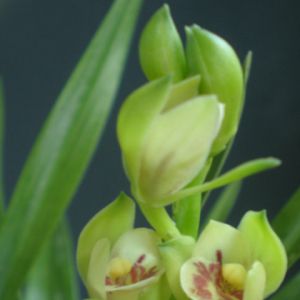
Introduction to the Characteristics and Care Methods of the Ju Cui He Jianlan (Cymbidium ensifolium) Variety
Namer: Lai Xuanyi. Origin: Meixian. A directly grown seedling collected from the wild, cultivated for five years, first bloomed in 2009 and bloomed again in 2010, jade-green in color, blooming in clusters.
-
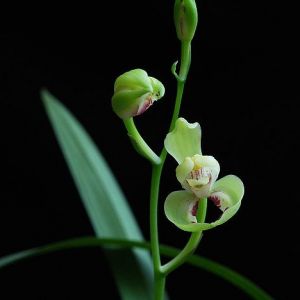
Introduction to the Characteristics and Care Methods of the Taiji Xiandie Jianlan (Cymbidium ensifolium 'Taiji Xiandie') Variety
Taiji Xiandie, discovered in Muchuan County, Leshan, Sichuan, exact year unknown, is a relatively new narcissus-type variety with excellent flower retention, the flower does not lose its shape after fading, and it is fragrant. This variety has medium-soft drooping leaves, the flowers rise above the foliage, and the flowers are large. The three outer petals are narcissus petals, the two inner petals are soft pouches, and the tongue is a dragon-swallowing tongue! The two side petals often carry butterfly markings, the butterfly transformation is vivid, and the contrast is good! The overall color is plain and clean, and the flowers...
-
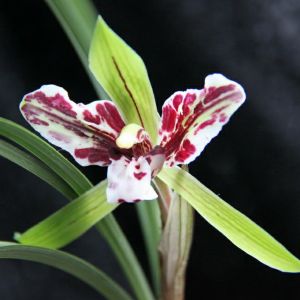
Crop Root Care Methods and Technical Key Points
Hua Hudie is a new flower, a ruidie (staminal-petal butterfly) type that people rather like. But from my observation: many novices like it, while few experienced orchid growers do. Why? Because novices look at the showiness, and Hua Hudie is quite brightly colored, just as people around the world tend to prefer Cymbidium and Phalaenopsis orchids. Experienced growers, however, feel that Hua Hudie has a low degree of butterfly transformation, heavy green moss,...
-
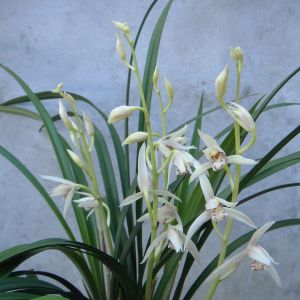
Introduction to the Characteristics and Care Methods of the Half-Snow Cymbidium ensifolium Variety
When the shoots emerge, the leaves are yellow-green, and after the plant matures they turn green, with white striped lines in the leaves. The leaves are intermediate and arching. The plant blooms 5--8 flowers. The flowers are small and held above the foliage, with a color of cream yellow inlaid with snow white. Typically the bloom is half snow white and half cream yellow. The bloom form is stable and very distinctive; such flowers are also relatively rare among Cymbidium ensifolium. It can be said to be excellent in both flower and foliage (of a somewhat lower grade). Also...
-
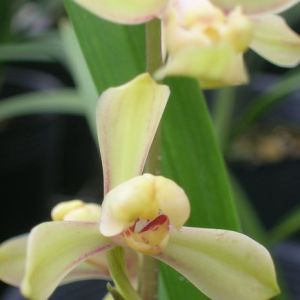
Introduction to the Characteristics and Care Methods of the Jinsha Mei Jianlan Variety
Originating from Emeishan City, Sichuan Province. In 2005, this flower was first seen at the home of the Emeishan orchid growers Wang Dongming and Wang Dongjie, two brothers. The soft-pouch narcissus is very elegant. Several seedlings were introduced. Later, upon inquiring about its history, it was learned that it was jointly owned by the two Wang brothers and teacher Xing Shaozhou. At first it had no name, and they all called it Yellow Flower Narcissus. This variety in our...
-
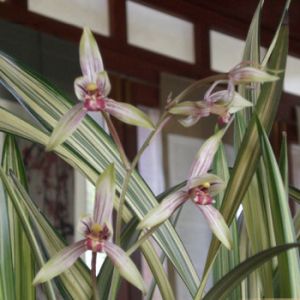
An Introduction to the Variety Characteristics and Care Methods of Fulong Jianlan (Cymbidium ensifolium)
Fulong is an old variety. In terms of variegation patterns, the ones currently sold on the market fall into two types: center-variegated and center-penetrating striped variegation. The green claw at the leaf tip of Fulong is relatively deep, and the variegation color is mostly white with a hint of yellow.
-
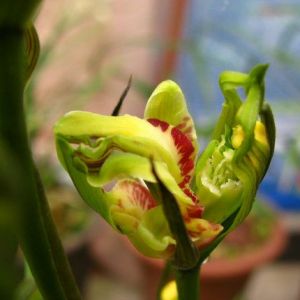
A detailed explanation of methods for identifying Cymbidium faberi varieties, teaching you to distinguish varieties with ease
One of the ten great odd flowers of Cymbidium sinense: an odd-form flower with "multiple noses" and "multiple tongues." Although quite a few odd-form flowers have been found in this province, no similar variety can be found; its unique distinction is that it maintains a "standard flower form" while still having variation, combining the classical and the novel, and it is very popular among lovers of odd-form flowers. This type has large flowers, plump and moist petals, multiple noses, multiple...
-
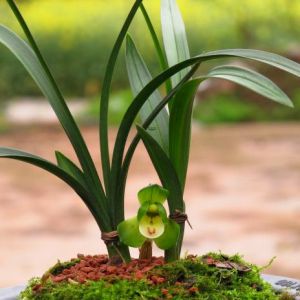
Characteristics and Care Methods of the Legendary Cymbidium goeringii Variety
Legend, a new spring-flowering Cymbidium goeringii variety with lotus-petal-shaped flowers, an ordinary-grade lotus petal, which is why this flower was named [Legend]. The only regret is that this year the flowers bloomed late and the flower stalks were not tall enough. Collected in Guizhou. Selected and named by Qifangyuan. The petals tend to droop at the shoulders and the root does not tuck in, making it look a bit clumsy!
条件筛选