-

Detailed Explanation of Short-Term Storage and Fresh-Keeping Methods for Ginger
If the ginger is to be processed and used, short-term storage and fresh-keeping are needed. Choose a sheltered spot indoors, first spread a layer of moist sand on the ground, then arrange the stored ginger upright and closely packed on top, covering each layer with 5-6 cm of moist sand; in this way it can be stacked 0.8-1 m high, with the topmost layer covered with 10 cm of moist sand, then cover with plastic film to retain moisture. Note that water must not enter the ground, and the film may be left off for the first half month.
-
Detailed Guide to Apricot Storage and Fresh-Keeping Methods and Techniques
Storage and Fresh-Keeping of Apricots 1. Determining the Suitable Harvest Maturity of Apricots Determining the suitable harvest maturity is key to storing apricots. The judgment of maturity can be determined based on factors such as the number of days of fruit development, changes in fruit color, the texture of the peel and flesh, the aromatic flavor of the fruit, and the firmness of the fruit's attachment. Apricots intended for storage should be harvested when the fruit has reached the inherent size of the variety, the fruit surface has turned from green to yellow, the sun-facing side shows the variety's inherent color, the flesh is still firm, nutrients have been fully accumulated
-
Pear Fruit Storage and Fresh-Keeping Methods and Technical Key Points
Different pear varieties and types require different optimal temperature, humidity and optimal gas composition standards. For newly bred varieties, experiments must be conducted to determine the suitable temperature, humidity and optimal gas composition required for their storage, so that temperature and humidity control and gas composition regulation can be effectively carried out during storage to achieve the best storage results. Pear fruits are broadly divided into two major types. 1. Crisp-fleshed type varieties: The white pear system and the sand pear system mostly belong to the crisp-fleshed type. Generally, crisp-fleshed varieties, after harvest
-
Harvesting and Fresh-keeping Methods for Cuttings of Amorpha fruticosa, an Open-field Flower
[Other Chinese names] Mianhuai [Family and genus] Fabaceae, Amorpha [Place of origin] North America [Plant characteristics] Amorpha fruticosa is a clumping shrub. Plant height 1-4 m. Branches grayish blue. Odd-pinnate compound leaves alternate; leaflets 11-25, oblong. [Cutting harvest] The harvested part is the first-year woody branch of Amorpha fruticosa, preferably 1-1.5 cm in diameter. To obtain the ideal propagation results, top branches with shorter internodes and full growth should be selected. Pay attention to reasonable cutting collection so as not to affect
-
Harvesting and Fresh-keeping Methods for Cut Leaves of Japanese Spindle
[Other Chinese Names] Yagi, Dongqing Weimao, Fufangshu, Haiweimao, Huangzhualongshu, Jiaweimao, Maixiang, Japanese Euonymus, Sijiqing, Zhengmu [Family and Genus] Celastraceae, Euonymus [Place of Origin] Japan, China [Plant Characteristics] Japanese spindle is an evergreen shrub or small tree. The plant height can reach 8 m. The branchlets are green. The simple leaves are opposite, obovate or narrowly oblong, 3-6 cm long, with an acute or obtuse apex, a broad wedge-shaped base, and finely blunt-toothed margins, smooth, leathery. [Cut Leaf Harvesting] Harvested part
-
Garlic Storage and Fresh-Keeping Methods and Key Technical Points
Storage of garlic sprouts, garlic scapes and fresh garlic bulbs ① Ice cellar storage: Choose a shaded, sealed room or basement as the cellar. The cellar floor should have a drainage ditch leading outside, spread a 0.8 m thick layer of ice on the floor, and build ice 0.5 m thick against the walls, up to near the roof. Tie garlic sprouts or garlic scapes into bundles of 1 kg, put them into plastic film bags with 15 kg per bag, tie the outside with rope and stack them in the cellar, filling each layer with ice fragments, stacking until about 2 m from the roof, then seal with a layer of ice on top, and spread a 1 m layer of rice husks over it to seal tightly and prevent the ice from melting. This allows garlic to be stored for more than half a year.
-
How to disinfect beekeeping tools? Introduction to disinfection methods for beekeeping tools
Bee pests and diseases cause great harm to beekeeping production. While controlling them, beehives, combs and the beekeeping tools used must be thoroughly disinfected. Commonly used disinfectants include: 1. Formalin: 1 part formalin, add 9 parts water to make a 4% aqueous solution, soak empty combs and small beekeeping tools in it for 24 hours, shake off the liquid, rinse with clean water and dry. . Put the combs into supers, 8 combs per box. Remove the wire mesh from 1 empty hive body with a screen window, stack 5 supers of combs on top, cover with a wooden inner cover, and seal all gaps tightly. Use a carbon or glass container to place
-
Storage and Fresh-keeping Methods and Technical Key Points for Japanese Sansui Pears
Cultivars such as Hosui and Golden Pear have won wide popularity among consumers for their excellent flavor, so in recent years Japanese and Korean superior sand pears have made considerable progress in our country, and fruit output has also risen substantially year by year. However, the flesh of these pears is relatively soft, easily damaged during transport, and because their harvest period is short, their storability is poor, and their sales period is too concentrated, it is difficult to supply the market over the long term. How to store and keep them fresh is therefore particularly important. The author hereby introduces Japan's storage and fresh-keeping methods for Sansui pears to everyone for reference. 1. Harvest maturity and
-
Detailed Explanation of Autumn Rabbit Keeping Epidemic Prevention Methods and Technical Key Points
When domestic rabbits come through the hot summer, their disease resistance declines somewhat. By autumn, they are also in the molting period and the doe kindling period, so epidemic prevention is very important. 1. Vaccine immunization ①Rabbit plague vaccine. The tissue inactivated vaccine currently in use has relatively good effects. Inject 1 ml subcutaneously per rabbit; strong immunity can be produced in 5-7 days, and the immune period reaches 6 months. ②Rabbit plague-Pasteurella bivalent vaccine. Inject 1 ml subcutaneously per rabbit; it can protect against rabbit plague infection for half a year and against Pasteurella infection for 4 months. ③Clostridium welchii type A inactivated bacterial vaccine. Inject subcutaneously per rabbit
-
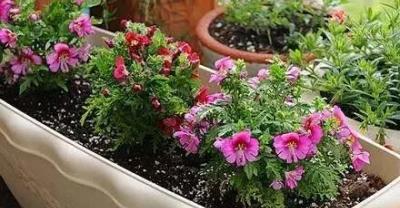
There's a trick to keeping plants alive. 20 years of experience teaches you 4 methods
Without further ado, let's get down to business. Everything has its methods and efficiency. 8 years of plant-growing experience helps you avoid detours and keep your plants alive. 1. Chinese medicine residue as flower fertilizer. Chinese medicine itself...
条件筛选