-

Key Technical Points for Establishing a High-Density, High-Yield Honeysuckle Plantation
Honeysuckle (Lonicera japonica) is a perennial semi-evergreen woody vine, also known as Erhua or Shuanghua, and is a traditional valuable Chinese medicinal herb. The roots, stems, leaves and flowers of honeysuckle can all be used medicinally, but the main medicinal part is the dried flower buds, which have the effects of clearing heat and detoxifying, eliminating chronic inflammation and improving
-
Key Points of High-Density, High-Yield Cultivation Techniques for Blackberry
1. Apply sufficient base fertilizer and plant at a rational density. Choose valleys or open fields with good fertility, loose soil and good drainage, and apply 1000-1500 kg of decomposed farmyard manure and 120-150 kg of superphosphate per mu, generally planting 800-900 plants per mu. For seedlings, choose plants with
-
Sunflower High-Density Planting Methods: Seed Selection Tips and the Best Sowing Time
Sunflower, also called kuihua, has seeds that can be processed into snacks or used for oil pressing. The oil residue can also be used as feed, making it one of the traditional cash crops. So how do you plant sunflowers at high density? How do you choose seeds? When is the best time to sow?
-

Detailed Explanation of Sweet Cherry Dwarfing and High-Density Planting Techniques
Sweet Cherry Dwarfing and High-Density Planting Techniques
-
Key Cultivation Techniques for Soybean Deep Loosening, Narrow-Row, Flat Sowing and High-Density Planting
Soybean deep loosening, narrow-row, flat sowing and high-density planting is another "new high-yield cultivation model" following "ridge three" and "large ridge density." It integrates advanced techniques such as deep loosening and rotary tillage for seedbed preparation, uses fertilizer to support density and density to increase yield, increases the canopy leaf area index, and improves light interception rate, achieving cost savings and efficiency gains in soybean production. Over two years, Luobei County promoted and planted 16000 mu in Tuanjie, Fengxiang, Zhaoxing and Taipinggou, with an average yield of 206 kg per mu, a 43% increase over the control.
-
What to do about premature senescence in high-density drip-irrigated cotton? Main causes and preventive measures
I. Main causes of premature senescence in high-density cotton planting 1. Variety factors Varieties are not resistant to premature senescence. In recent years there have been many cotton varieties; some have aged and degenerated, and some are inherently poor in disease resistance and premature senescence resistance, or are unsuitable for high-density planting, leading to premature senescence in cotton. 2. Environmental factors ① Temperature For mid-early maturing cotton, the suitable sowing period is when the 5 cm soil temperature stably passes 12°C. If sowing is too early or the seedling stage encounters low-temperature chilling injury, because the air temperature is relatively low, root growth is slow and diseases are severe, which easily damages the cotton root system function, thereby
-
What are the techniques for establishing a high-density, high-yield honeysuckle plantation?
Honeysuckle (Lonicera japonica) is a perennial semi-evergreen woody vine, also known as Erhua or Shuanghua, and is a traditional precious Chinese medicinal herb. The roots, stems, leaves and flowers of honeysuckle can all be used medicinally, but the main medicinal part is the dried flower buds, which have the effects of clearing heat and detoxifying, eliminating chronic inflammation and boosting human immunity. In recent years, with the intensification of honeysuckle development and the broadening of its application fields, market demand has grown ever larger. Improving cultivation techniques to raise the early-stage yield of honeysuckle and maintain the duration of its full-production period has become a major problem urgently needing solution in production. In recent years we
-
Comprehensive growth regulation technology for high-density cultivation of cotton variety 81-3
The 81-3 variety has the characteristics of a high boll-setting rate per plant, strong boll retention, disease resistance, high yield and good quality, and is currently the main variety planted by our regiment. At the same time, the 81-3 variety also has the characteristics of weak growth vigour at the seedling stage, gradually strengthening growth vigour at the bud stage, strong growth vigour at the flowering stage, no premature senescence in the late stage, and a rather long growth period. To obtain large-area abundant and high yields under high-density cultivation conditions, it is necessary, on the premise of scientifically and rationally managing water and fertiliser, to coordinate the relationship between vegetative growth and reproductive growth of cotton, and to master the comprehensive growth regulation technology for high-density, high-yield cultivation of 81-3.
-

Is it better to plant corn at low density or high density?
Summary: Should corn be planted at "high density" or at low density? The autumn harvest season has arrived, and corn has successively entered the harvest season. The issue of corn planting density is actually a concern for many farmers. I previously saw someone...
-
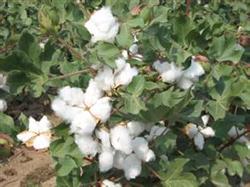
Detailed explanation of the high-density cotton cultivation model with five rows per film
Management of cotton during the boll-opening stage focuses on "four skillful practices" (skillfully managing fertilizer and water, skillfully pruning, skillfully picking rotten bolls, and skillfully promoting ripening). 1. Skillfully manage fertilizer and water to promote nutrient translocation. First, foliar topdressing. For cotton fields where leaves lose greenness too early and show fertilizer deficiency and premature aging, spray 50-60 kg per mu of 1%-2% urea solution on the leaves to extend leaf...
条件筛选