-
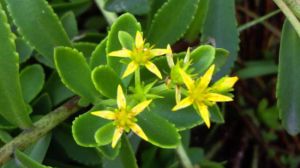
How to identify Sedum aizoon? Master these identification features
Sedum aizoon is a perennial herbaceous plant in the genus Sedum of the family Crassulaceae. Leaves: The leaves of Sedum aizoon grow opposite each other in pairs, are relatively hard, and are elliptical, some ovate, about 4-8 cm long and about 2 cm wide, with a glossy surface like leather. Flowers: The petals of Sedum aizoon are yellow, usually 5 petals, oblong, about 6-10 mm long overall; the upper inflorescence produces several flowers, with bracts below.
-
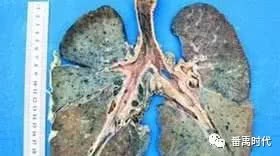
What are the traditional Chinese medicine therapies with distinctive features for farmer's lung?
Farmer's lung is one of more than twenty types of pneumoconiosis and belongs to the organic pneumoconiosis series; it has not yet been included among the statutorily designated pneumoconioses in China. The pneumoconioses already included in China are silicosis, coal workers' pneumoconiosis, electric graphite pneumoconiosis, carbon graphite pneumoconiosis, talc pneumoconiosis, cement pneumoconiosis...
-

A Detailed Guide to the Technical Requirements and Features of Home Hydroponic Flowers
Technical Requirements and Features of Home Hydroponic Flowers
-
Symptoms and Pathological Features of Snake Venom Poisoning in Animals
Snake venom poisoning is an acute toxic disease caused by venomous snake bites in animals, in which the venom enters the body through the wound and causes hemolysis, paralysis of sensory nerve endings and shock as its characteristic features. It can occur in all kinds of animals, and is commonly seen in grazing animals and dogs. 1. Clinical symptoms The sites where animals are bitten by venomous snakes are mostly the lips, nose tip, face and lower parts of the limbs. In horses, cattle and sheep, the bite sites are mostly near the hock joint or fetlock joint, while in pigs and dogs they are mostly on the limbs and nose tip. The closer the bite site is to the central nervous system and to areas rich in blood vessels, the
-
What are the characteristics of the yew? A comprehensive analysis of its main features
The characteristics of the yew are: 1. Strong adaptability and a wide range of adaptation. 2. Fast growth and a short cultivation cycle for medicinal use. 3. Easy to propagate and a high survival rate for afforestation. 4. Strong resistance to pests and diseases. 5. High paclitaxel content, and the whole plant can be utilized. 6. It combines both economic benefits and landscaping and ornamental value.
-
What are the morphological characteristics, damage features, and living habits of the jujube mealybug?
The adult jujube mealybug is flat and oval, with a body length of about 2.5 cm, a slightly raised back, densely covered with white waxy powder, needle-like waxy structures along the body margin, and a pair of exceptionally long waxy tail bristles at the rear. The nymph is flat and oval, with well-developed legs that are brown. The egg is oval, composed of white waxy flocculent material. The jujube mealybug has 3 generations per year, overwinters as nymphs in bark crevices, begins activity in April, lays eggs in early May, with an egg period of 9-10 days. The peak occurrence periods of nymphs for each generation are early June, mid-July, and mid-September. Mass overwintering begins in early October.
-
What are the varietal characteristics of Wuyi rock tea? A detailed explanation of each variety's features
There are many varieties of Wuyi rock tea, each with different characteristics; some are fairly distinct, while others differ only slightly. Distinguishing varieties is therefore no easy task, and it requires long-term observation, discrimination and comparison to tell them apart clearly. The methods of distinction are mainly based on the branches, trunks and leaves of the tea plant, and on the appearance, aroma type and taste of the finished tea. Differences in the branches and leaves of the tea plant are relatively easy to distinguish, but differences in aroma type must be judged by smell alone - how subtle, how subtle! Zhang Yuan of the Ming dynasty said in "Records of Tea": fragrance includes true fragrance, orchid fragrance, clear fragrance and pure fragrance.
-
The Method and Features of Folk Clay Pot Whole Lamb
"Folk clay pot" is an earthen cooking vessel handed down among the people of Jiangxi for preparing all kinds of food. Its unique advantages have been adopted by the people of Xuanwei, a place rich in Huangshan goats, for cooking healthy, high-quality ecological lamb. Top-quality local Xuanwei Huangshan goats are selected, and a unique traditional recipe and meticulous cooking methods are used to prepare a whole-lamb feast that is fresh, fragrant and rich, spicy yet not harsh, with an endless aftertaste and the distinctive mouthfeel of warming and tonifying without causing internal heat. The product has the effect of nourishing and strengthening yang. Xuanwei's folk clay pot whole lamb is distinguished by its delicious taste and good mouthfeel
-
Identification Features and Control Methods of the Privet Looper
Scientific name: Naxa seriaria Motschulsky. Morphological features: The adult has a wingspan of about 40 mm, with a slender body that is yellow-white. The forewings and hindwings are thin, white, and slightly transparent, with two rows of black star-shaped spots along the outer margin, and each wing has a relatively large black spot in the middle. The forewing also has a row of dark brown spots near the basal angle. Newly laid eggs are white, gradually turning orange-red, glossy, and arranged in bead-like strings. The larva is about 30 mm long, dark brown, with indistinct black patterns and spots on its body. Except for the thoracic legs and the prolegs on the eighth and ninth abdominal segments, the prolegs on the other segments are all reduced, and each segment is covered with gray-white hairs. The pupa is yellow-brown with dark brown spots and patterns. Damage situation: This insect mainly damages privet (Ligustrum), water wax (Ligustrum obtusifolium), and osmanthus (Osmanthus fragrans). It is a voracious leaf-eating pest that often gathers in groups and nibbles away the leaves. Especially when the population density is high, it can completely devour the leaves of an entire plant or a whole patch of water wax and privet in a short period, seriously affecting growth and ornamental value. Occurrence pattern: This insect has two generations per year and overwinters as middle-instar larvae on the tree canopy. Pupation begins in mid-May, and adults emerge at the end of May and in early June. Adults mate on silk webs and lay eggs in strings. After the eggs hatch, the larvae spin silk webs on the tree canopy and nibble the leaves until they are eaten up, then spread to neighboring canopies. The second-generation adults appear around August, and the adults are phototactic. Control methods: 1. During the peak emergence period of adults, use lights to trap and kill the adults. 2. The pupae and eggs are all attached to the insect silk webs near the tree canopy, so they can be searched for and removed. 3. In the early stage of larval hatching, spray 1-2 times with insecticides such as dichlorvos, trichlorfon, and omethoate at a 1000-fold dilution. This insect has strong resistance to pesticides, so spraying should be thorough and should be done early; otherwise, the efficacy will be affected.
-
Recipe and Features of Lard-Net Wrapped Reeves' Shad
[Features] The fish is plump, tender and delicate; dipped in minced ginger and fragrant vinegar, it tastes delicious. [Ingredients] 350 g middle section of Reeves' shad, 150 g pork caul fat, 10 g diced candied pork fat, 25 g lard, 1 scallion knot, 25 g fragrant vinegar, 1 slice ginger, 5 g minced young ginger, 25 g Shaoxing wine, 20 g ham, 10 g refined salt, 1 soaked shiitake mushroom, 25 g white sugar, 25 g winter bamboo shoot flesh, 15 g fermented rice. [Preparation] 1. Open the Reeves' shad, remove the internal organs and gills, keep the scales, and wash clean with water.
条件筛选