-
Bacteria may be inconspicuous, but they led an agricultural revolution
In Europe, flour is the most important food ingredient, but for more than two hundred years, flour merchants have been troubled by a kind of big fat worm. They are the larvae of the Mediterranean flour moth, a full two centimeters long, quietly hiding in warehouses where flour is stored...
-

Hydroponic bonsai becomes popular, triggering a new round of consumer revolution
Hydroponic bonsai will trigger a new round of consumer revolution. Due to its unique technology, high ornamental value and the market being almost blank, there is basically no competitor. The price of hydroponic flower products is several times or even more than ten times that of ordinary potted flowers of the same kind....
-
An invasive alien weed that was once a life-saving vegetable during the revolutionary era is now a money-making crop
After spring arrives, all kinds of wild grasses begin to grow in the rural countryside. For farmer friends, wild grasses are a part of life; some wild grasses they love, and some they hate. Below, the author will...
-
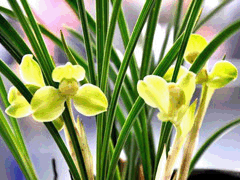
A Brief History of Orchid Cultivation: Understanding the Historical Evolution of Orchid Growing in One Article
A Brief History of Orchid Growing
-
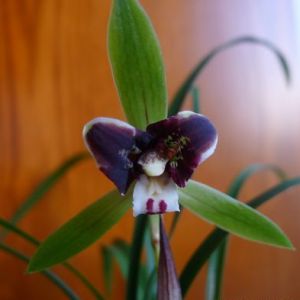
A rambling discussion of the historical origins and evolution of orchid fragrance
A three-star butterfly Cymbidium goeringii from Guizhou, its flower form is not very stable, and when it opens poorly the petals are pale in color.
-
The Evolution of the Steaming Green Tea Making Process from Cake Tea to Loose Tea
In the production of steamed green cake tea, in order to improve the shortcomings of difficult-to-remove bitterness and improper aroma, the practice of not kneading or pressing after steaming and directly drying was gradually adopted, transforming steamed green ball tea into steamed green loose tea to preserve the tea's aroma. This reform appeared in the Song Dynasty. The "Song History: Treatise on Food and Money" records: "Tea has two types, one called slice tea, one called loose tea," and slice tea is cake tea. In the Yuan Dynasty, Wang Zhen's "Agricultural Treatise" contains a detailed record of the steamed green loose tea process at that time: "After picking, steam briefly in a steamer, achieving the right degree of rawness and doneness. After steaming, spread thinly on baskets and mats, knead while damp, then enter the roasting stage, spread the fire evenly
-

Food Revolution Day! Farmers' Market Introduces TUV Year-Round Inspection for the First Time to Ensure Food Safety
Food Revolution Day! Farmers' Market Introduces TUV Year-Round Inspection for the First Time to Ensure Food Safety
-
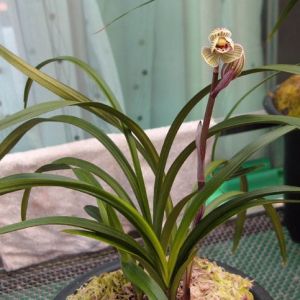
Interpretation of the Latest Research Findings on the Evolution of Line Art in Chinese Orchids
Zhenhe, a dwarf lotus-petal variety among the lotus-petal orchids, a thick-skinned broad-leaf lotus-petal orchid from Baoshan, Yunnan. The first time I saw this flower was from exactly this angle in the photo, at exactly this position. It seemed I was subdued by its aura, a strong sense of suffocation, unable to feel my heartbeat. From a distance of two meters, I examined it with reverence and solemnity. Yunnan's rich...
-
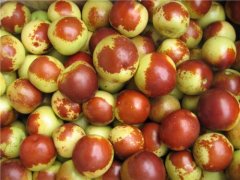
Will winter jujubes turn fully red as their color develops? Selection methods and the use of rapid-reddening agents
Winter jujubes generally have a color that is a mix of green and red, but some winter jujubes are purple-red. Why is that? Why are winter jujubes so sweet? Many people think that only red jujubes count as ripe. Some vendors, in order to attract consumers, treat green jujubes to make them red.
-
The Evolution of Agricultural Greenhouses: From Primitive Hotbeds to Photovoltaic Greenhouses
Today, we can enjoy fresh and delicious out-of-season fruits and vegetables even in the cold winter, and greenhouse agriculture certainly deserves much of the credit. Many people assume that greenhouses must be a product of modern scientific progress. However, as early as more than 2000 years ago, our great ancestors were already
条件筛选