-

When does the high-incidence period for Phalaenopsis pests and diseases occur, and what should be noted for prevention and control?
When it comes to Phalaenopsis (moth orchid), the flowers are certainly beautiful, but if pests and diseases strike, that is really frustrating. Many people wonder why a perfectly healthy flower suddenly wilts while they are caring for it. In fact, its illnesses are not without patterns, and there are certain periods when problems are especially likely to arise. The transition between spring and autumn each year is when Phalaenopsis pests and diseases
-

Phalaenopsis watering rules in summer: is it better to water in the morning or in the evening?
Does summer make you worry about watering? Water in the morning or in the evening? This is no small matter; get it wrong and your orchid may wilt. When watering Phalaenopsis in summer, is it better to water in the morning or in the evening? Choose the morning first (before 7 o'clock, when the sun is not fully out), and absolutely do not choose the evening (especially after 8 o'clock
-

Four Flowers That Keep Blooming Even with Insufficient Indoor Light
Does poor light at home mean you can never keep flowering plants? Not at all! Today I have dug up four "shade-tolerant blooming little champs" for you - even with pitifully little light, they can still bloom in lively profusion. Oncidium: Oncidium, just from the name you can tell how lively it is. Its flowers are yellow, pink and white, with dozens in a single spray
-

Why Phalaenopsis (moth orchid) leaves grow crooked and uneven, and how to fix it
If you grow Phalaenopsis orchids, you may have noticed that your orchid's leaves grow every which way, some with bent necks, some higher on one side and lower on the other, looking terribly uneven. Actually, this isn't a big problem, but understanding the cause is the only way to get it growing neat and looking pleasing.
-
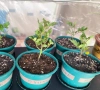
Causes of Yellowing and Drying Leaves in Tomato Plants After Fruit Set and How to Prevent and Treat Them
Tomato leaves suddenly turning scorched yellow and wilting during the fruiting stage? Don't panic! Here we explain the causes and the corresponding symptoms. 1. Improper watering Waterlogged roots and root rot: the potting soil stays soggy for a long time, the roots are deprived of oxygen and rot, and the older leaves turn yellow first, spreading upward from the bottom; they feel soft and mushy to the touch, and in severe cases the whole plant wilts. Drought and lack of water: forgetting to water for a long time
-

Why the Bottom of Cherry Tomatoes Turns Black and How to Prevent It
Have you fellow cherry tomato growers noticed that the fruit you finally managed to set suddenly turns black and soft at the bottom, or even rots into a hole? This is no accident; nine times out of ten it is "blossom end rot" at work - a disease that specifically targets the blossom end of the fruit and is especially common during the fruiting stage. Don't panic. Today we will cover the causes, the solutions and the prevention techniques.
-

Recommended flower varieties that even beginners can propagate successfully from cuttings for free
Want to grow flowers at home but don't want to spend money on seedlings? Then you have to try cuttings! Today let's talk about several popular flowers that are super suitable for "zero-cost" propagation, even clumsy beginners can easily handle it! Rose: Rose cuttings are really not difficult, just find a healthy branch. Pick a semi-lignified one, which simply means the branch color is between tender green
-

How to treat and prevent root rot in Phalaenopsis (moth orchid) caused by overwatering?
Many people who have seen a Phalaenopsis are drawn in by its flower shape, and besides having an auspicious flower meaning, its blooming period can even span the entire winter, which is why it has become the "most enduring companion" in the hearts of flower lovers. Despite all its beauty, problems of one kind or another inevitably arise along the way when growing Phalaenopsis, and among the most common
-

Which plants are commonly attacked by spider mites, and how can they be prevented?
The most annoying thing about growing flowers is spider mites! Although these little bugs look like just a few small red dots to the naked eye, they are ruthless when they chew on leaves. Within a few days, the leaves turn sickly yellow and are covered with spider webs. As for which plants are easily plagued by spider mites, roses, hydrangeas, clematis, chrysanthemums and jasmine are all hard-hit areas. Roses: Ros
-
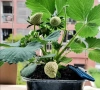
Causes of Withered Strawberry Flower Buds and Simple Prevention Tips
You're full of hope that strawberries will hang heavy on the branches, only to find the flower buds withering one by one? Don't worry. Today we'll walk you through pinpointing the cause and saving them scientifically. 1. Causes Calcium deficiency: Strawberries are extremely sensitive to calcium! When calcium is lacking, the tips of the flower buds dry up, the growing points die, and it may come with "blossom-end rot" in the fruit. Especially during consecutive cloudy
条件筛选