-

Characteristics and Control Methods of Spider Mite Disease in Orchids
Spider mites, also known as mites, come in many species. Take the Schizotetranychus shi species as an example: it is a common type of spider mite that damages orchids and other flowers. Its mouthparts attach to the underside of leaves, piercing through the leaf epidermis and spongy tissue layer into the leaf tissue, sucking the chloroplasts and cell contents of the palisade layer cells. It first damages the lower leaves, then gradually...
-
What are the control measures for black spot disease in orchids?
Orchid black spot disease, also known as round spot disease, occurs in Fujian, Yunnan, Jiangsu, Shanghai, Nanjing and Guangdong. In 1983, a major outbreak of orchid black spot disease occurred in Guangzhou, with the incidence rate in some nurseries reaching 92.8% and the mortality rate 26.8%, causing great economic losses. The control measures are as follows: 1. Strengthen quarantine, paying particular attention to...
-
Pest and Disease Control Methods for Growing Orchids on Balconies
Orchids belong to the family Orchidaceae, are monocotyledonous plants, and are perennial herbs. They are 20 to 40 cm tall, with long tubular roots. The leaves grow in clusters from the stem, are linear-lanceolate, slightly leathery, and form a bundle of 2 to 3 leaves. (1) Substrate too wet or too dry. Growing orchids on a balcony is very different from growing them on the ground. Orchid pots on the ground are directly connected to the earth,...
-
Pollution-free control methods for orchid pests and diseases
1. Washing powder and detergent: Washing powder can dissolve the waxy coating of scale insects and at the same time form a layer of foam that wraps around the insect body, causing the scale insects to suffocate and die. Washing powder solution can control some pests and diseases. Control method: dissolve a small amount of washing powder in warm water, then dilute with water to a 1000-fold solution and spray the orchid plants; it can kill aphids, whiteflies, red...
-
How to Treat Black Spot Disease in Orchids? Practical Control Methods Shared
Orchids are plants whose "foliage is more worth viewing than the flowers." When an orchid is infected with black spot disease, the best way to cure it completely is to remove the diseased leaves, but this reduces the ornamental and economic value of the orchid (especially rare varieties). The following three methods can effectively cure black spot disease in orchids without removing the diseased leaves. Gentian violet method: when you find an orchid suffering from black...
-
How to Do a Good Job of Pest and Disease Prevention and Control for Home-Grown Orchids
Early summer has arrived, temperatures have risen noticeably, and with the increased rain, all kinds of tiny insects that harm orchids are stirring into action. When pests are rampant, timely prevention and control is essential so that orchids can grow strong and healthy. Using pesticides is quick and convenient, and the results are good. But every medicine has some toxicity, so it is best to use them with caution to avoid pesticide damage. Using simple methods to control insects...
-
How to care for orchids in June? Please keep this care guide handy
Climate characteristics this month: with Grain in Ear and the Summer Solstice marking the true start of summer, high temperatures, strong light and dry air are the hallmarks of this month! This month is mainly about protecting buds and leaves. On clear days, orchids can receive light freely before 10 o'clock, but after 10...
-
How to increase air humidity when growing orchids on a balcony?
Orchids like a humid climate. When the air humidity is insufficient, orchid leaves become coarse, wrinkled and lusterless, thus losing their elegant beauty. Based on the practice of fellow orchid growers, there are several ways to increase humidity: 1. Splash water on the floor and spray water into the air. Assessment: almost no cost, but the drawback is that the effect is very short-lived, so it is not practical. 2. ...
-
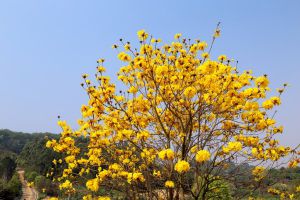
A Detailed Guide to Pest and Disease Control for the Golden Trumpet Tree
Many people may never have heard of the golden trumpet tree (Handroanthus chrysotrichus). In fact, it is a highly delightful ornamental plant, and because of its extremely charming appearance it has been crowned the national flower of Brazil. The golden trumpet tree looks different in all four seasons, with unique ornamental features in each one. Perhaps because the golden trumpet tree is so beautiful, it is also very susceptible to pests and diseases. Let's take a look below.
-
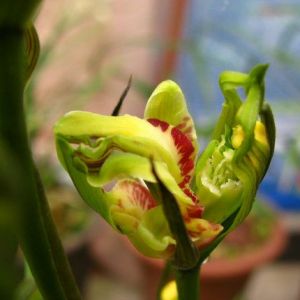
A detailed explanation of methods for identifying Cymbidium faberi varieties, teaching you to distinguish varieties with ease
One of the ten great odd flowers of Cymbidium sinense: an odd-form flower with "multiple noses" and "multiple tongues." Although quite a few odd-form flowers have been found in this province, no similar variety can be found; its unique distinction is that it maintains a "standard flower form" while still having variation, combining the classical and the novel, and it is very popular among lovers of odd-form flowers. This type has large flowers, plump and moist petals, multiple noses, multiple...
条件筛选