-
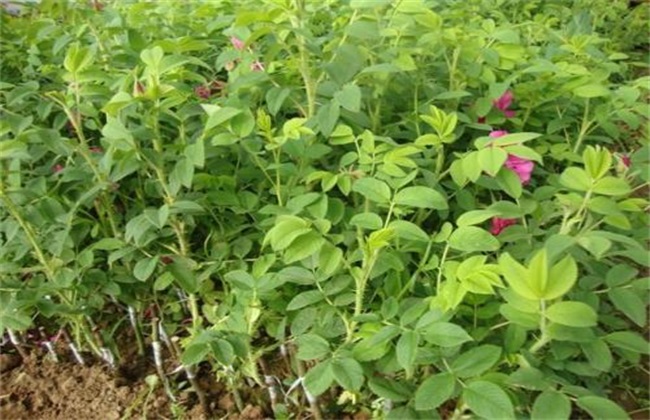
Detailed Guide to Rose Cutting Propagation: Beginners Can Easily Learn It
Rose Cutting Propagation Methods
-
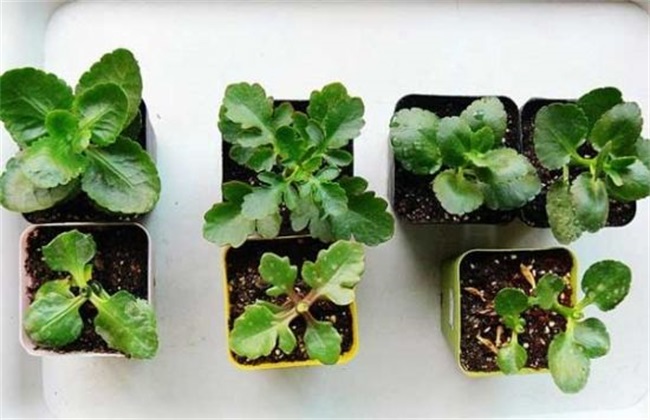
Detailed Guide to Kalanchoe Cutting Propagation, Beginners Can Easily Learn
Kalanchoe Cutting Propagation Methods
-

How to grow geraniums? Learn cultivation techniques with me (Part 1)
Geranium is a perennial herbaceous plant, subshrub-like, fond of cool climates, with a suitable growth temperature of 5°C-25°C; seeds germinate better at 21°C-20°C. It is not heat-tolerant, and the plant enters a semi-dormant state during the high-temperature period in summer. It likes to grow in an environment with sufficient light, is tolerant of dryness, and dislikes waterlogging; the growing medium is required to be loose and well-drained, rich in organic matter. I. Sowing and seedling raising 1. Sowing time in southern regions: open-field sowing period February-March, September-October, open-field flowering period February-June, October-December; greenhouse sowing period January-March, September
-
How to plant geraniums? Learn to grow them with me (Part 2)
Water. Geraniums are not tolerant of waterlogged conditions and require a growing medium with good aeration, otherwise the root-to-shoot ratio easily becomes imbalanced; too much water makes them prone to root rot caused by the fungus (Pythium) and gray mold (Botrytis); but the growing medium should not be too dry either. Because this causes salts to accumulate around the root zone and leads to burning, and when the medium is too dry, the lower leaves of the plant often turn reddish to yellow. Geranium stems and leaves are covered with fine hairs, so when fertilizing and watering, avoid getting fertilizer solution on the leaves,
-
Detailed Guide to Azalea Cultivation: Beginners Can Easily Learn It Too
Azaleas are one of the representative acid-loving plants. They prefer a cool, humid, well-ventilated environment. The suitable growing temperature is 13°C to 25°C. During the growing period, the relative air humidity should be maintained at 60% to 70%, and as flowering approaches, the relative humidity can reach around 80%. Azaleas love light but cannot tolerate direct strong sunlight. In spring and autumn, shading should be appropriately increased, and in midsummer, shading should reach around 70%, with frequent spraying of water on the leaf surface to increase humidity and lower temperature. In summer, azaleas should be placed outdoors for care to facilitate ventilation. During the growing period, azaleas should be given light but frequent fertilizer, preferably farmyard manure
-
A Beginner's Guide to Bonsai Appreciation: Learn to Appreciate the Beauty of Bonsai from Scratch
1. Root spread The primary requirement of an excellent bonsai is the root spread. The root spread can be said to be essential and very important in creating the natural tree form of the entire bonsai. Whether the root spread is beautiful or not has a decisive influence on the artistic value and appreciation value of the work. The beautiful root spread referred to in bonsai is the ground-level roots below the trunk base, extending in all directions, sometimes curving, sometimes hidden in the soil, clinging tightly to the ground surface, so as to keep the potted tree from wobbling in any way. The commonly mentioned "four-sided root spread" is precisely the most beautiful root spread. 2. Trunk base Under normal
-
What plant is Firmiana major? Learn about Firmiana major in one article
Firmiana major Hand.-Mazz., of the family Sterculiaceae. Aliases: Red-flowered Parasol Tree, Black-bark Parasol Tree. Deciduous tree, reaching over 14 m tall. Bark greenish with a grayish-black tinge, old bark black and slightly rough; branchlets stout, covered with short pubescence. Leaves palmately 3-lobed, 17-30 cm long, 19-40 cm wide, width often greater than length, apex acute. Base cordate, leaf surface nearly glabrous, underside densely covered with yellowish-brown short pubescence that gradually falls off later, basal veins 5-7; petiole stout, 15-45 cm long
-
What is anthracnose in Chinese orchids? Let us learn about this disease
Anthracnose in Chinese orchids affects orchids of the genus Cymbidium such as Spring Orchid (Cymbidium goeringii), Faber's Cymbidium (Cymbidium faberi), Four-season Orchid (Cymbidium ensifolium), Chinese Cymbidium (Cymbidium sinense), and Cold Orchid (Cymbidium kanran), causing scorched black spots on leaves and fruits, and in severe cases the entire leaf dies. Symptoms: In the early stage of the disease, round or oval red-brown spots appear in the middle of the leaf, and semicircular ones at the leaf margin. When they occur at the leaf base, large spots or a large number of them can also cause the entire leaf to die. In the later stage, the center of the spot becomes lighter in color, and the upper ring splits longitudinally. Spots on fruits are irregular, appearing as elongated dark brown patches. Pathogen: The disease is caused by several species of fungi. According to isolation and culture by the Shanghai Institute of Landscape Science,
-
What are the characteristics of the Korean pine tree species? Learn about Korean pine characteristics in one article
The characteristics of the Korean pine tree species are: an evergreen tree of the pine family (Pinaceae). It can reach 50 m in height and 1.5 m in diameter at breast height. The trunk is straight and full, and the crown is conical. The tree can live more than 500 years. It is one of China's precious timber tree species. Because the trunk is straight, the wood quality is good, the lumber yield is high, and the decay resistance is strong, its craft value is extremely high. It is an excellent timber for construction, aviation, utility poles, sleepers, bridges, vehicles and ships. It is also a superior raw material for making various molds, plywood, musical instruments and sports equipment. In addition, Korean pine can also be tapped for resin; the bark can
-

Detailed Explanation of Gardenia Propagation Methods: Learn to Propagate Gardenia Easily
Gardenia Propagation Methods
条件筛选