-

How to tell the age of a Phalaenopsis orchid seedling, and after how many years does it stop growing?
Growers of Phalaenopsis orchids have probably all wondered: how old is this plant, exactly? How do you tell? And after how many years does it stop growing? Actually, it's not hard — just look at its "figure" and you'll have a good idea. The age of a Phalaenopsis seedling is mainly judged by its pseudobulb, the plump little "belly" beneath the leaves. A one-year seedling is the thinnest and smallest, usually
-
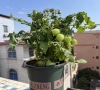
Why does a tomato stem grow bumps, is it a disease?
Don't ignore bumps appearing on tomato stems; timely treatment is the only way to ensure a good harvest! Today I've put together the common causes and solutions, so even beginners can easily get the hang of it. Aerial root type bumps (a physiological response) Appearance: white/light green soft bumps on the stem, like "little aerial roots", mostly near the potting soil. Causes: overwatering, soil poorly
-

What is the crystal tip on a Phalaenopsis orchid? What does it do?
At the tip of a newly grown Phalaenopsis root, there is a shiny, semi-transparent little bulge that feels tender and rather like jelly. This is what orchid growers often call the "crystal tip." Though it may not look like much, whether you can grow a Phalaenopsis well can be judged about eighty percent by looking at the crystal tip. Put simply, the crystal tip is the growth point of the Phalaenopsis's new roots.
-

What to do when a Phalaenopsis orchid grows a young offshoot on its side, and does it need to be divided into a separate pot?
A perfectly healthy Phalaenopsis orchid suddenly sprouts a small tender shoot on its side. It looks quite cute, but you are not sure what to do with it. Should you keep this little offshoot or remove it? Should you hurry to divide it into its own pot? Phalaenopsis orchids are different from other flowers: their side shoots usually grow on the flower spike, and sometimes they also emerge near the roots. This shows that your Phalaenopsis has been kept
-

Does the Phalaenopsis orchid fear the sun, and what should be done if its leaves dry out after sun exposure?
In the morning, when you open the curtains and look at the Phalaenopsis orchid on the balcony, should you let it get some sun? Some people say, "Flowers need sun to bloom vibrantly," but you also worry that too much sun will make the leaves dry up like greens that have been drained of water, which is really puzzling. Phalaenopsis orchids aren't unable to get sun; they fear that kind of "harsh sun." Their native environment is under the shade of trees in tropical rainforests, and they simply can't grow in places that are exposed to strong sun all day. So if you're growing them at home, you need to find a "semi-shaded" spot for them - the slanted morning sun before 9 a.m. is fine for a while, but the strong light at noon and in the afternoon must absolutely be blocked. Healthy Phalaenopsis orchid leaves are glossy, thick, and neatly edged. If they get too much sun, the leaf tips first turn scorched yellow, and in severe cases, the entire leaf will wrinkle and turn gray, feeling dry and rough, as if it has been roasted.
-

What does "leaf-center spike" mean in Phalaenopsis orchids, and how should it be handled?
Fellow Phalaenopsis growers, have you ever suddenly noticed one day that the center of your plant seems to have been "locked" by something? The new leaf curls into a sharp little cone, stiffly stuck in the middle, and no matter what, it just won't unfurl? -- Congratulations, you may have encountered the legendary "leaf-center spike"! Don't let the name scare you; it's actually not that
-

Can rice water be used to water flowers? What benefits does it have for plants
The rice water poured away every day when cooking is actually a neglected "nutritional treasure trove." Many people don't know that this seemingly ordinary milky-white liquid, after simple processing, can become a "super drink" for plants. Watering flowers with rice water is not only environmentally friendly and economical, but can also provide plants with various nutrients needed for growth, but the method of use
-
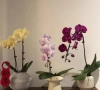
What to do if a Phalaenopsis flower spike breaks but does not come off completely? Handle it differently depending on where it broke
You have been carefully growing a Phalaenopsis, a flower spike emerges, and just as it is about to bloom you accidentally knock it and break it - sometimes it does not come off completely, sometimes it snaps clean into two pieces. Do not panic! A broken flower spike can be handled according to the situation, and if you find the right method there is still a chance to save it. Below we explain the response techniques clearly. The flower spike is the "key channel" for a Phalaenopsis to bloom; when it is not completely broken, fix
-

What family and genus does the string of pearls plant belong to? It belongs to a different family and genus
String of pearls is a succulent plant in the Asteraceae family, Senecio genus. Its plump, jade-green oval leaves look like small pearls, so it is also known as pearl spider plant. The stems trail or creep along the soil surface, so it is mostly grown as a hanging basket plant. Mature plants produce small white flowers.
-
How much is the purchase price of calcium fruit per jin? What benefits does it have for the human body?
The scientific name of calcium fruit is actually Prunus humilis (Chinese dwarf cherry), and it is called calcium fruit because its fruit is high in calcium. For most people this fruit should be rather unfamiliar; it is a minor fruit variety, with a very limited planting area, mostly concentrated in Shanxi, Shandong and the Northeast and other places,
条件筛选