-

Analysis of Off-Season Shiitake Mushroom Production and Market Conditions
1. Off-season shiitake mushrooms are produced during the high-temperature season from May to October using natural conditions such as mountain caves and civil air defense structures, or facilities such as constant-temperature cold storage. Nowadays, off-season cultivation is mostly carried out in existing cold storage (constant-temperature warehouses) or ordinary greenhouses using cooling equipment. The technical key points are: 1. Facility preparation: For an ordinary edible mushroom greenhouse, after completing spring production, immediately clean up, remove the original mushroom bags, clean the interior of the greenhouse, check and repair the greenhouse film, spray an appropriate amount of medication for sterilization, then build
-
Processing Methods and Techniques for Edible Mushroom Seasonings
Processing of Edible Mushroom Seasonings
-
Detailed Explanation of the Method for Making Shiitake Mushroom Seasoning MSG
1. Raw material formula (%). Shiitake mushroom concentrate juice 25-50, sodium chloride 8-12, maltodextrin 12-18, fine sugar powder 15-30, vinegar 1.6-3.2, baijiu 3-6, vegetable oil 0.3-0.6, capsaicin 0.01-0.05. 2. Key production points. ① Wash the shiitake mushroom material, cut into pieces, extract with hot water at 40-55°C for 4-6 hours, mushroom-to-water ratio of 1:10, filter after extraction to obtain the first filtrate. Add water to the filtrate and boil for 1 hour, filter to obtain the second filtrate.
-
Detailed method for making shiitake mushroom seasoning
This seasoning has both the unique fragrance and flavor of shiitake mushrooms, moderate acidity, and contains appropriate proportions of alcohol, sugar and amino acids, making it quite convenient to use. Production method 1. The raw materials for this seasoning sauce are shiitake mushroom mycelium (dried shiitake mushroom powder can also be used), rice koji (enzyme) and water (neutral or slightly alkaline clean water); use 2 liters of fresh koji juice at a concentration of 8-10 Baume as the culture medium, put it into a long-neck flask, use sterilized silk cotton as the stopper, and finally place it in a small pot and boil to sterilize for 30-40 minutes. 2. Then, the
-
Off-season cultivation of edible fungi is highly profitable, with broad market prospects
So-called off-season cultivation refers to cultivation carried out in seasons when normal growth is not possible. In edible fungi production, this is essentially a matter of timing, that is, cultivation carried out in natural seasons when normal production is not possible through improved facilities and equipment, artificial regulation of conditions and other auxiliary means, and it can also achieve production results similar to those of normal-season production; for example, the relatively typical summer cultivation of enoki mushroom (Flammulina velutipes) and winter cultivation of straw mushroom, and so on. For example, the low-temperature variety enoki mushroom should fruit from November to February, but with facility-based automatic controlled cultivation
-
Key Points of Off-Season Cultivation Techniques for Oyster Mushrooms During High-Temperature Periods
Off-season cultivated edible mushroom products often sell for 4 to 6 times the price of those in the regular season, yielding quite remarkable returns. To improve off-season edible mushroom cultivation during high temperatures, our institute has explored off-season high-temperature cultivation techniques for oyster mushrooms over the past few years. The results show that off-season oyster mushroom cultivation not only has a high success rate, a short time, fast fruiting and easy management, generally fruiting in 15 to 20 d, with a biological conversion rate of over 90%, but also has a short cycle and significant benefits. It is introduced as follows: 1 Cultivation time arrangement Conventional oyster mushroom cultivation generally stops going to market in mid-May each year.
-
Key Points of Off-Season Oyster Mushroom Cultivation in Midsummer
Cultivating oyster mushrooms in midsummer usually involves indoor spawn running and outdoor casing soil for fruiting. Using the opposite cultivation method - burying bags outdoors for spawn running and removing bags indoors for cooling and fruiting - can control contamination by competitor fungi during high-temperature periods, favor the growth and reproduction of oyster mushroom mycelium, and increase oyster mushroom yields. 1. Spawn and substrate. Select high-quality medium-to-high-temperature strains for spawn. For the cultivation substrate, choose from the following formulas according to specific conditions. Formula 1: 97 kg small cottonseed hulls, 1 kg gypsum powder, 1.5 kg lime powder, 10 g of 50% carbendazim
-
Fast-Track High-Yield Cultivation Techniques for Oyster Mushrooms in the Hot Season
High temperatures are extremely detrimental to the normal growth and high yield of oyster mushrooms. If conventional cultivation methods are still used, not only will the cost of oyster mushrooms be high, but the yield will also be low. However, if fast-track high-yield cultivation techniques are adopted, high yield and high efficiency can be achieved. Summarizing our years of experience, fast-track high-yield cultivation of oyster mushrooms in the hot season mainly involves the following key points: Selecting suitable spawn There are many varieties of oyster mushrooms. Pure high-temperature-type varieties have poorer quality, so it is advisable to choose wide-temperature-type varieties that are relatively tolerant of high temperatures, such as Suping, Aikang 558, Xide 33, Yaguang No. 1, as well as Gaoping No. 1, Sanxia 13
-
How are shiitake mushroom seasonings processed? An introduction to several common methods
1. Shiitake mushroom soup base: Take 100g shiitake mushroom powder, 350g table salt, 100g white sugar, 80g monosodium glutamate (MSG), and 1g white pepper powder, and mix thoroughly to make it. This soup base can be used as a seasoning for foods such as noodles, fast food, dumplings, and wontons, and can also be used as a condiment and seasoning for various cold dishes and vegetarian soups. 2. Shiitake mushroom soy sauce ① Raw material formula. 100L shiitake mushroom concentrate, 25kg table salt, 100g Sichuan pepper, 100g pepper, 150g star anise, 750g ginger, 5kg high-quality soy sauce, 0.1kg citric acid
-
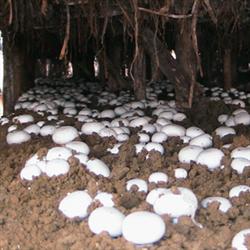
What is the most suitable season for growing button mushrooms?
In which season is it suitable to grow button mushrooms? Please explain that the button mushroom (Agaricus bisporus) is a low-temperature fruiting fungus, producing fruiting bodies only below 18°C, with the optimum fruiting temperature at around 16°C. Therefore, the cultivation season is mostly arranged in autumn and winter and extends into early spring. Because of climate differences and local microclimates in different regions, it can...
条件筛选