-

Rhododendron Propagation Methods and Key Points of Soilless Culture Techniques
Rhododendrons are world-famous flowers and one of China's top ten famous flowers. There are about 900 or more species of rhododendron in the world, and China has 530 or more. Because rhododendrons are short plants that bloom in all four seasons, with double flowers and extremely high ornamental value, they can often be seen in residential communities and plazas
-
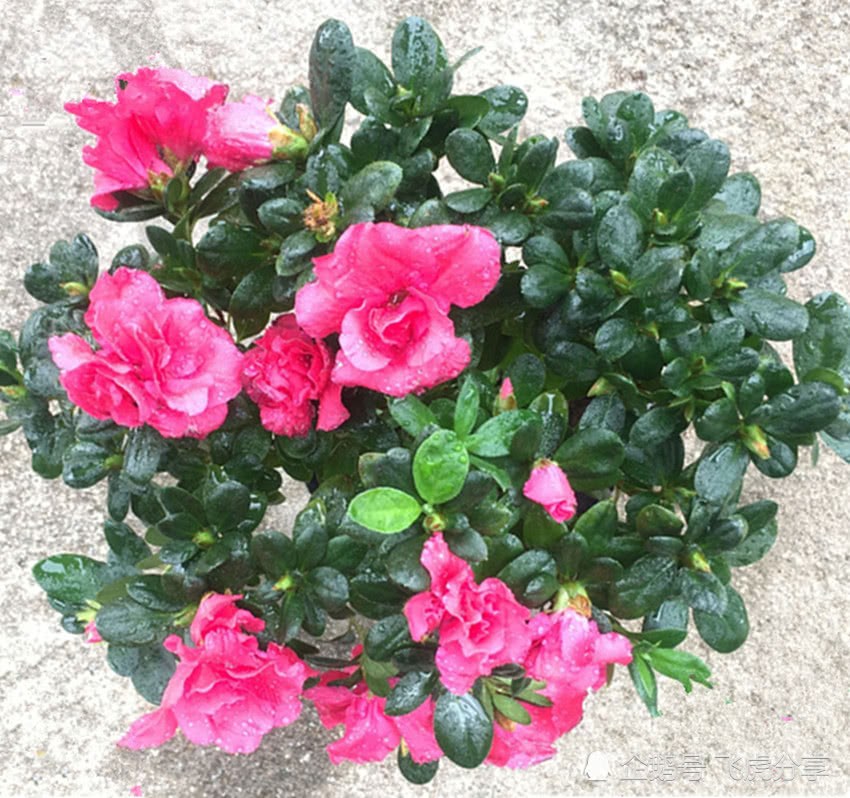
Grow orchids, clivias and rhododendrons with a bit of this: no root rot, no yellow leaves, every pot thrives
More and more people are growing flowers now, and all kinds of flower-growing tips and methods keep coming out. Many flower lovers have used beer, rice-washing water, soybean milk and the like to grow flowers, and the results have been pretty good. But these things can only provide nutrients to the plants, ...
-
Rhododendron cutting propagation method, high survival rate and blooms the following year
As one of China's top ten famous flowers, the rhododendron's reputation is known to everyone; its beauty has won people's hearts and become a symbol of beauty. And to have rhododendrons blooming in more places, we need to master its propagation methods. So how do rhododendrons propagate? It is understood
-

Rhododendron Propagation Methods and Key Management Techniques
Propagation methods: Rhododendrons can be propagated by seed sowing, cuttings, grafting, layering and other methods. 1. Seed propagation: Rhododendrons have a high seed-setting rate, produce many seeds and have a high germination rate, and the seedlings have strong adaptability and vitality, but they grow slowly, are difficult to cultivate, and the offspring are not necessarily ideal, so seed propagation is rarely used in production. It is used only in the following cases: first, for raising rootstock; second, for obtaining new varieties through hybrid breeding; third, when excellent wild species need to be introduced. (1) Seed collection: When the fruit turns from green to brown
-
Common Rhododendron Diseases and Detailed Symptoms
1. Leaf gall disease. Before onset, especially when new shoots emerge and leaves unfold, spray Bordeaux mixture at 1:1:200, and promptly remove diseased leaves when found; before budding, spray 0.3-0.5 Baume degree lime sulfur mixture or Bordeaux mixture at 1:1:200 2-3 times, usually once every 7-10 days; after onset, spray 65-80% mancozeb 500x solution or 0.3-0.5 Baume degree lime sulfur mixture 3-4 times, once every 7-10 days. 2. Leaf spot disease and brown spot disease. From May to August, spray 7
-
Rhododendron
Rhododendrons are among the world's most famous ornamental flowers, blooming every spring with graceful form, brilliant colors, and richly varied petals; they flower uniformly and have a long blooming period. In nature, rhododendrons can form magnificent landscapes. "Why seek famous gardens to view the spring breeze? Mountain flowers along the way never weary the eye. Day after day the Jin River displays its brocade, while the clear stream mirrors the red azaleas in reverse." These are lines of poetry people use to praise the rhododendron. Besides being ornamental, rhododendrons also have certain medicinal value. The flowers, leaves, and roots can all be used as medicine. The flowers contain anthocyanins and flavonols, and have the functions of promoting blood circulation, regulating menstruation, and dispelling wind-dampness.
-
Detailed Explanation of Seed Propagation Techniques for Rhododendron schlippenbachii
The wild cold-resistant Rhododendron schlippenbachii naturally grows on mountains in Kuandian, Fengcheng and other places, and has adapted to the cold, humid, and slightly acidic soil environment on the mountains. It is extremely difficult to survive when introduced down the mountain for transplanting. Garden science and technology personnel made many efforts but did not succeed. Since 1998, we have conducted experiments on down-mountain transplanting, cutting propagation, and seed propagation of Rhododendron schlippenbachii, and only the seed propagation method succeeded. The seedling plants of Rhododendron schlippenbachii propagated by seed have well-developed root systems and grow quickly, but they need to be cultivated for 5 to 6 years before the seedling plants can enter the flowering period. 1. Seed collection in October
-
What plant is the big white rhododendron? Let us introduce you to this flowering plant
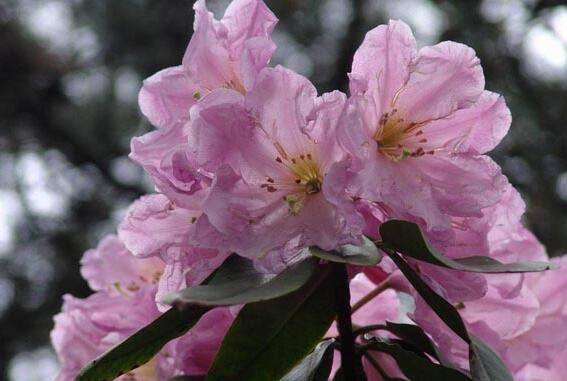
It belongs to the subsection Fortunea within the group of evergreen scaleless rhododendrons. Evergreen shrub to small tree. Young branches stout, green, initially covered with white powder. Leaves thickly leathery, clustered at the tips of branches; oblong or long elliptic, 7-17 cm long, 3-6 cm wide; apex obtuse and rounded, with a small mucro; leaf surface green, underside pale green. Flowers from April to June; terminal racemose corymb, the rachis about 3 cm long, with glands; 8-10 flowers, gathered into a spherical cluster up to 20 cm in diameter; corolla funnel-shaped campanulate, 6-8 lobed, 3-5 cm long, the lobe tips nearly rounded with a slight notch, hairy at the base inside the tube;
-
Leaf scorch on Japanese aralia (Fatsia japonica), spotted laurel (Aucuba japonica 'Variegata'), and rhododendron
Japanese aralia and spotted laurel are shade-loving plants that cannot tolerate strong sunlight. The scorching sun of midsummer often severely burns their young leaves, causing the young leaves to curl, turn yellow, and wither, or the leaves to scorch, seriously affecting plant growth. Certain pathogenic fungi then seize the opportunity to invade, further causing infectious diseases, and now fungal fruiting bodies can be seen on some of the lesions. Rhododendron is a semi-shade-loving plant, and the cause of its leaf scorch is similar to the above. Young leaves are more severely affected, and this disease causes a large amount of abnormal leaf drop in the plants. Control methods: (1) Because midsummer often brings sudden, relatively strong wind and rain,
-
Introduction to Rhododendron scopulorum and Its Planting and Care Methods
Family and genus: Ericaceae, Rhododendron. Morphological characteristics: evergreen shrub. Height l-4m. Leaves obovate to oblanceolate, with small scales on the underside. 3 flowers terminal, corolla white with pink, about 4.5cm long. Flowering period April-May. Prefers warm and humid conditions, likes light, slightly tolerant of poor soil. A plant endemic to Tibet. Produced in the Yarlung Zangbo River gorge, growing only in scrub at the forest edge on mountain slopes at an altitude of about 2000m.
条件筛选