-

Common Treatment Methods for Several Types of Fever in Pigs
In traditional Chinese veterinary medicine, the understanding of fever is relatively broad: sometimes a body temperature higher than normal is considered fever, and sometimes even when the body temperature is not elevated, as long as heat signs appear, it is also classified as a heat syndrome. Because there are many causes of fever and the syndrome types are relatively complex, in clinical practice fever must be treated based on syndrome differentiation, grasping its essence. In many years of teaching and clinical work in traditional Chinese veterinary medicine, the author has used traditional Chinese veterinary medicine for treatment and achieved relatively satisfactory results. It is briefly introduced as follows for the reference of peers. 1. Excess heat in the qi aspect. One white pig from Group 3, Yihe Village, Jingzhou District.
-
Swine anthrax is a bacterial disease of pigs
Anthrax is an acute septicemic infectious disease caused by Bacillus anthracis that affects various livestock, wild animals and humans alike. Clinically it presents with septicemia symptoms; necropsy findings include poor blood clotting, markedly enlarged spleen, and hemorrhagic gelatinous infiltration under the skin and serous membranes. In pigs it occurs sporadically, mostly in subacute or chronic form. Epidemic characteristics: Bacillus anthracis forms spores that can survive for a very long time in the external environment; pigs become infected through the digestive tract, and grazing pigs can be infected by rooting in the soil for food; pigs have relatively low susceptibility; cases are mostly sporadic or discovered at slaughter; there are slightly more cases in summer.
-
How to prevent and treat bacterial endometritis in cattle and pigs
Metritis in livestock such as cattle and pigs is mainly inflammation of the endometrium, hence it is called endometritis. Endometritis is usually a mucous or purulent inflammation of the uterine mucosa. Myometritis and perimetritis, however, can occur only in acute postpartum metritis and are also very rare. Endometritis is an extremely common reproductive organ disease in female livestock, and is divided into acute and chronic forms. Acute cases all occur postpartum, secondary to infection by pathogenic bacteria during dystocia, uterine prolapse, or retained placenta; chronic cases mostly develop from acute ones, or result from infection at breeding. When female livestock develop
-
Want to raise pigs safely and efficiently in winter? Managing these three aspects is key
Winter temperatures are low and the weather is cold, which is not conducive to the normal growth and development of pigs, and also makes them prone to illness. Therefore, safe pig raising in winter should revolve around the theme of cold protection, and specifically the following three aspects should be grasped: 1. Increasing the temperature. There are many ways to raise the temperature of the pig house, but there are four simple, economical, and practical methods: 1. Cover open-style pig houses with plastic film. It is best to cover with double-layer plastic film. Although the cost is higher than single-layer plastic film covering, the insulation effect is better. This method is suitable
-
Feeding Pigs Extra at Night Makes Them Gain Weight Faster
In the hot summer weather, feeding pigs at night makes them gain weight faster than feeding them during the day. This is because the cooler night weather and fewer outside disturbances help pigs eat more, sleep more, and reduce their daytime activity. To increase feeding at night, keep the following points in mind: feeding times can generally be 19:00, 23:00, and 4:00 in the early morning, for 3 feedings; during the day, give each pig 0.5% lightly salted water once at 10:00 a.m. and once at 2:00 p.m. Feed formula: wheat flour 20%, corn flour 20%, wheat bran 26%, cottonseed cake 30%, fish
-
What are the benefits of giving pigs more exercise? What farmers need to know
Proper exercise for pigs is indispensable, and it is especially needed for piglets and breeding pigs. What are the benefits of exercise for pigs? 1) Exercise can promote the body's metabolism, strengthen the pig's constitution, increase appetite, help with the digestion and absorption of feed, and thereby promote the pig's growth and development. Increasing the exercise of breeding boars can improve mating ability. Exercise for pregnant sows can prevent difficult births and reduce stillbirths. 2) Through outdoor exercise, letting pigs bask in the sun, the 7-dehydrocholesterol contained in pig skin, under ultraviolet radiation
-
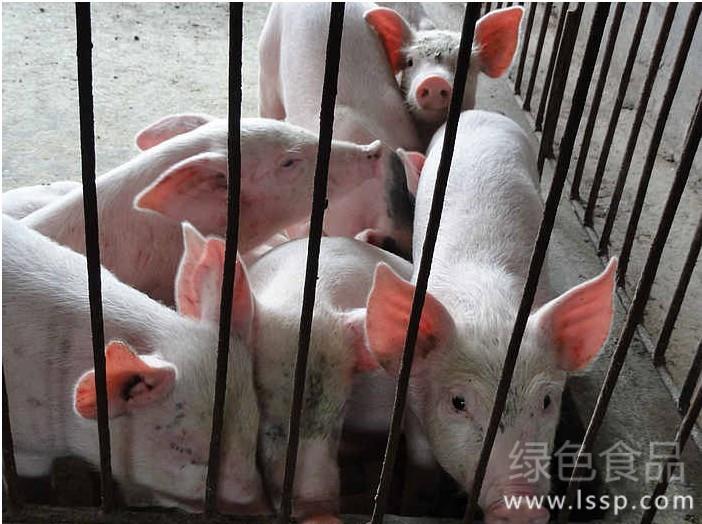
Key points for raising pigs in winter: cold protection and warmth must be done well
Key points for raising pigs in winter: strengthen cold protection and warmth
-
Organic phosphorus poisoning in pigs can be treated with a mung bean and licorice decoction
(1) Cause. When pig farms and pig raisers use organic phosphorus preparations such as trichlorfon or dichlorvos to expel internal and external parasites from pigs, improper dosage, or consumption of vegetable and fruit scraps and contaminated grass that were recently sprayed with pesticides, can cause poisoning. (2) Clinical symptoms. Within 30 minutes after pigs consume organic phosphorus pesticides, poisoning symptoms appear. Affected pigs show cholinergic nerve excitation, excessive salivation, foaming at the mouth, restlessness, some have nasal discharge and tears, severe congestion of the conjunctiva, constricted pupils
-
Green mung bean and licorice decoction can be used to treat organophosphate poisoning in pigs
Treat with traditional Chinese medicines such as green mung beans and licorice, and the cure rate reaches more than 95 percent. Dosage and method of use: 1000 grams of green mung beans and 300 grams of licorice, add an appropriate amount of water and decoct, let it cool to warm and administer orally. The above is the dosage for adult pigs; reduce proportionally for piglets, 2 times a day, and recovery occurs after 2 to 4 doses. Sesame oil 150 to 200 milliliters can also be given orally once; the above is the dosage for adult pigs, reduce proportionally for piglets, and for severe cases, repeat the oral dose once, generally taking effect after half an hour.
-
What feeding value does potato have for pigs?
1. Nutritional characteristics. Potato has high yield, relatively low crude fiber content in tubers (4.4%), and high protein biological value. About 80% of the tuber dry matter is starch. Calculated by the amount of digestible energy and protein produced per unit area, it is higher than general crops. Its energy value is slightly higher than sweet potato, but lower than corn; the crude protein content is about 9%, higher than cassava and sweet potato, and the lysine content is higher than corn; the carotene content is extremely low, and other vitamin contents are close to corn. Potato contains trypsin inhibitor.
条件筛选