-
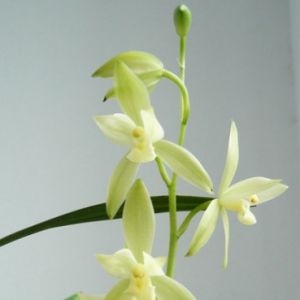
Introduction to the Guanyin Su Cymbidium ensifolium Variety and Its Care Methods
Guanyin Su has medium arching leaves, a broad leaf width, and gracefully curved leaf shapes. The pseudobulbs are large, with 3-5 leaves per stem, and the foliage has a fine gloss. It propagates easily. The petals are broad and fleshy, in a pure green color. The flower stems rise above the foliage, with 5-10 flowers per stem. It blooms well and has a strong fragrance, making it very popular among enthusiasts.
-
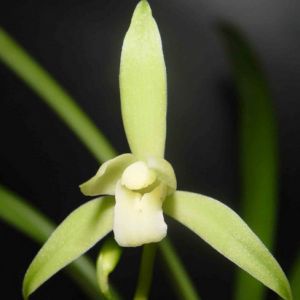
How Do Orchids Reproduce? A Detailed Guide to Common Propagation Methods
Yongfu Su has a long history. Legend has it that in the past, when Yang Guifei was admiring orchids, she was particularly fond of this one for its exceptional fragrance and lingered there, reluctant to leave. While admiring the orchid leaves, she unexpectedly left her fingerprints on them, leaving concave-convex wavy fingerprint-like patterns on the leaves. Therefore, Yongfu Su is also called Guifei Su or Fingerprint Su. Characteristics: leaves broad and thick, leaf tips appearing...
-
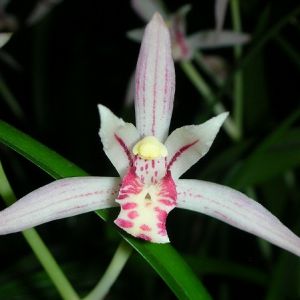
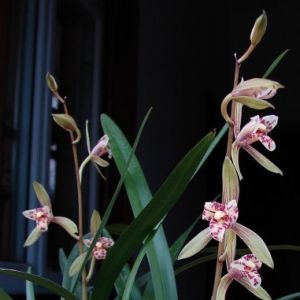
Introduction to the Characteristics and Care Methods of the Four Seasons Jade Consort Cymbidium Variety
The flower color closely resembles that of the New Year Jade Consort, hence it is called Four Seasons Jade Consort. The leaves are narrow and slender, similar to those of Baodao Fairy. The outer petals are white with a pinkish-red glow, and the center ridge of the lip is crimson red. The flower shape is delicate and small with vivid color, and the flower stalk is snow white, standing above the leaves.
-

A Detailed Guide to Chinese Orchid Cultivation and Appreciation Methods
The iris and orchid grow in hidden valleys, yet they do not cease to be fragrant because no one is there; a gentleman cultivates the Way and establishes virtue, and does not change his integrity because of poverty and hardship.
-
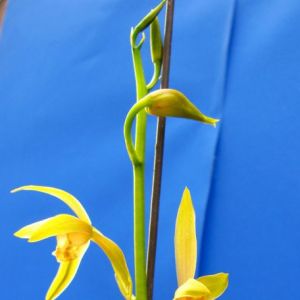
What are the methods for identifying orchids? Teaching you how to identify orchids
Cymbidium sinense 'Jinbi Huihuang' is a yellow-flowered variety of Cymbidium sinense, relatively few in number, with flower spikes already tall, blooming as beautifully as its name suggests, worth collecting.
-
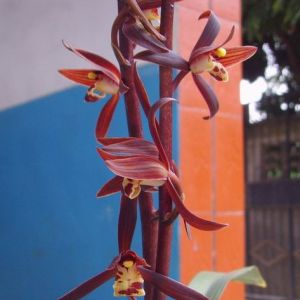
Characteristics of the Red Three Stars Cymbidium ensifolium variety and introduction to its care methods
Origin: Ya'an, Sichuan. Leaves: length 40 cm, width about 1.5 cm; on leaves grown in the current year there are fairly obvious and beautiful variegation patterns, with a certain ornamental value. The petaloids (pollen petals) are butterfly-transformed, of the same shape and texture as the lip, and are evenly distributed in a triangle at 120 degrees, with the petaloids and lip tightly clasped at the base in a bell shape. And in the clasped lip...
-
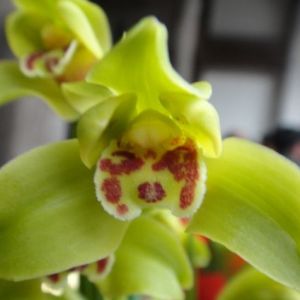
Introduction to the Characteristics of the Yufengqiao Cymbidium (Huilan) Variety and Its Care Methods
Yufengqiao, a New Cymbidium (Huilan) Variety
-
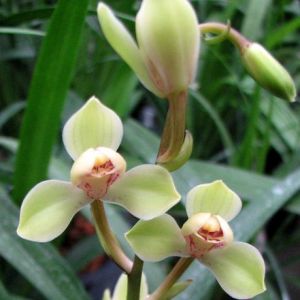
How to clean up blackened orchid root tips? Learn methods to restore root health
Zhonghua Hexian: named by Mr. Xu Zongquan of Shantou (Zhonghua Shuixian), once called (Chigan Xiahua) by Mr. Zheng Liyong! Produced in Sichuan, this line's leaves are relatively thick, slanting upright, with lotus-type narcissus petals, flowers large and held above the foliage, well-spaced with orderly arrangement, petals broad and thick, each bloom uniform, keeping its form after long opening, a fine variety worth cultivating...
-
Variety Characteristics and Care Methods of Jinhuashan Cymbidium sinense
Jinhuashan is one of the traditional Cymbidium sinense varieties. It has a semi-pendulous leaf posture, thick leaf texture, and broad leaf width, with leaves that often appear wavy. The leaf color is emerald green with excellent gloss, and the leaf tips are edged with golden-yellow claw variegation, commonly known as "golden edge." The flowers open with a purple-red colored center. It blooms around the Spring Festival every year!! This variety has a tall, magnificent plant shape and is exported in large quantities to Japan and South Korea every year....
-
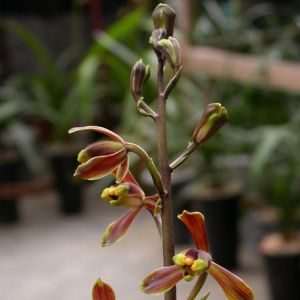
Fuman Mei Cymbidium sinense: Variety Characteristics and Care Methods
Fuman Mei, also known as Mei Wang (Plum King), has an unknown breeding history, and can be considered both a new and an old variety. The leaves are broad and large, the plant is not tall, and the flowers rise above the foliage. Fuman Mei was named by Mr. Zhou He'an of Hong Kong, China, who in 1989 in Guangzhou purchased from Mr. Su Yuan of Chaoshan three plum-petal plants bearing only mung-bean-sized flower buds for 500 US dollars; they later bloomed with true standard plum petals, and so he named it...
条件筛选