-

How to choose a budding stimulant for Phalaenopsis orchids? You need to know the dangers of overuse
Friends who grow Phalaenopsis orchids surely want their plants to sprout lots of new shoots, and that's when they start wondering: which budding stimulant is actually reliable? And will using too much cause problems? First, let's talk about choosing a budding stimulant. What's common on the market now, like cytokinin-type budding stimulants, is quite popular, since they can stimulate the growth of Phalaenopsis bud points and make the original
-

Can bud-promoting paste make Phalaenopsis grow flower spikes? A guide to the correct use
Someone asked: "My Phalaenopsis at home only grows leaves and won't bloom. Can bud-promoting paste make it sprout a flower spike?" And anxious beginners who just got into the hobby ask: "I bought the bud-promoting paste and brought it home, so how do I use it without 'messing up'?" First, let's talk about what bud-promoting paste is. Put simply, it's like a "growth accelerator" for Phalaenopsis; its main ingredient is plant hormones, and it can stimulate the plant to grow new lateral buds. But remember! Bud-promoting paste is not the same as a bloom-promoting agent; its job is to promote small buds, which is a completely different matter from forcing flower spikes! It's like asking a fitness trainer to help you build muscle and expecting him to also run a marathon for you along the way.
-

Will too-high temperatures inhibit flowering in Phalaenopsis orchids, and what consequences will it cause?
Phalaenopsis, as a tropical epiphytic orchid, is extremely sensitive to its growing environment, and temperature is a key factor affecting its growth and development. When the temperature is too high, Phalaenopsis not only struggles to produce beautiful flowers but also faces a series of growth crises. Phalaenopsis is native to tropical and subtropical rainforest regions, and its suitable
-

Why Are the Leaf Tips of Phalaenopsis (Moth Orchid) Drying Up? A Look at Physiological Causes
Many people have kept a Phalaenopsis, or moth orchid, at home. When it comes to care, some grow theirs into a dazzling display of blooms, while others watch their plants develop all sorts of leaf problems over time, such as yellowing and drying up. Could these be normal physiological phenomena? Generally speaking, when moth orchid leaves turn yellow or dry up, the cause lies in the growing environment or
-
Which flower varieties are suitable for growing in a greenhouse?
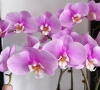
Today I will introduce 6 kinds of flowers that are especially easy to grow in a greenhouse, and they are also very beautiful, so even beginners can handle them easily! Phalaenopsis orchids Phalaenopsis orchids have long been known as the "Queen of Orchids." Their flowers are shaped like dancing butterflies, and their colors are rich, including pure white, pink, purple-red, and unique varieties with spots or stripes. The flower stems
-

Which indoor flowering plant varieties are not suitable to grow because they fear the heat in summer
In summer, with the scorching sun and rising temperatures, not all flowers can grow safely in such an environment. For indoor gardening enthusiasts, understanding which flowers fear heat and avoiding caring for them in summer can effectively prevent flowers from withering and dying. Below are several heat-sensitive indoor flowers that are not suitable for growing in summer.
-

What harm does overwatering cause to Phalaenopsis orchids, and does it easily lead to root rot?
Many beginners, out of affection for their Phalaenopsis orchids, often unconsciously water them a little too much, not realizing that this seemingly "caring" gesture may bring many harms to the orchid, and may even endanger its life. Among these, the root rot caused by overwatering is especially serious. Phalaenopsis orchids originate from tropical rain
-

Is it better for Phalaenopsis potting medium to be dry or wet, and will keeping it constantly moist cause root rot?
Phalaenopsis is a popular choice in home gardening, yet during care, the degree of dryness or moisture in the potting medium has always been a challenge. So is it better for Phalaenopsis potting medium to be dry or wet? Will keeping it constantly moist really cause root rot? The answers to these questions directly relate to the growth and health of Phalaenopsis. Phalaenopsis belongs to the epiphytic Orchidaceae
-

Does Repotting a Phalaenopsis with Too Much Force Kill It, and What Specific Harm Does It Cause?
Phalaenopsis (moth orchid) is a highly popular ornamental flower. During care, repotting is an important step, but if done with too much force, it can cause serious damage to the plant. Will a Phalaenopsis die if repotted with too much force? And what harm does excessive force cause? Phalaenopsis is an epiphytic plant, and its root system differs from that of ordinary plants, not
-

What to Do When a Phalaenopsis Orchid Stops Growing? Causes and Solutions Explained
As you get to know Phalaenopsis orchids better, I believe every time you bring a new plant home to grow, you'll have a different experience. Sometimes when you've been growing Phalaenopsis for a long time, the problems you run into may not be the same every time, but for growers who have cared for them many times, you gradually start to take things in stride, because their native environment and home care are always different, and it's normal for a few problems to come up.
条件筛选