-

When repotting a Phalaenopsis, should the nutrient cup be removed or buried together with it in the new pot?
When buying or cultivating Phalaenopsis, the nutrient cup is a common growing container. When repotting a Phalaenopsis, should the nutrient cup be removed? Can the nutrient cup be buried in the new pot together with the plant? Handling the nutrient cup correctly is crucial to the Phalaenopsis's subsequent growth, and this involves the rules of plant root growth and care
-

How Long After Dividing a Phalaenopsis Should You Fertilize? A Detailed Guide to Fertilizing Methods
When it comes to caring for Phalaenopsis orchids, especially fertilizing management after division, many flower lovers may not be very familiar with it. Division propagation is a common method for cultivating new plants, and fertilizing management after division is a key part of ensuring healthy growth of Phalaenopsis orchids. Mastering the correct fertilizing timing and methods can let Phalaenopsis orchids thrive after division
-
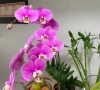
What do sunburned Phalaenopsis orchid leaves look like, and how should you remedy it?
Phalaenopsis orchid leaves are delicate and extremely sensitive to strong light. Once sunburn occurs, the plant sends out "distress signals" through changes in its leaves. Below, let's talk about the signs of sunburn in Phalaenopsis orchids and first-aid methods. 1. Signs of sunburn 1. In the early stage, round or oval pale yellow patches appear on the leaf surface, similar to "water marks" left by scalding.
-
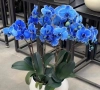
Should you cut the flower spike after a Phalaenopsis finishes blooming? Let me teach you the correct way to prune
After a Phalaenopsis finishes blooming, should you cut the flower spike? Master these practical tips to help your Phalaenopsis recover faster and even bloom explosively again! 1. How to decide whether to cut the flower spike: If the spike is withered and yellow: when the spike becomes shriveled, yellow, and even feels brittle at a light touch, it means the plant has already finished reabsorbing its nutrients. At this point, decisively cut from
-

What does "semi-mature seedling" mean for Phalaenopsis, and how should it be cared for?
In the cultivation of Phalaenopsis, the "semi-mature seedling" is a key stage. So what exactly does semi-mature Phalaenopsis seedling mean? And how should it be carefully cared for? A semi-mature Phalaenopsis seedling refers to a plant that has passed the seedling stage and has a certain growth foundation in both morphology and physiology, but has not yet fully reached the mature
-
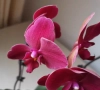
How should you deal with the flower spike of a Phalaenopsis orchid after it finishes blooming? Should you cut it off?
After the blooming period of a Phalaenopsis orchid ends, handling the flower spike and the follow-up care is a technical job. Cut it the right way and it can bloom again; cut it the wrong way and you may end up waiting a whole year in vain. Here are some suggestions. I. Flower spike pruning options 1. Short-term bloom-promoting pruning If you hope for a repeat bloom in the short term, you can keep the healthy stem section on the upper half of the flower spike and cut at the second-to-last
-

Should Sphagnum Moss Be Pressed Tight for Phalaenopsis? There Are Many Benefits to Growing in Sphagnum Moss
When caring for Phalaenopsis, sphagnum moss is a commonly used growing medium. Whether it should be pressed tight and what benefits it offers are questions many flower growers care about, and these questions are really quite important. Many people think that pressing the sphagnum moss down tightly will hold the Phalaenopsis roots firmly in place, but this is a misconception. The roots of Phalaenopsis are different from those of ordinary
-

New to growing Phalaenopsis orchids: should you use sphagnum moss or bark, and can you plant with both together?
New growers of Phalaenopsis orchids often struggle with the choice between sphagnum moss and bark, and some also wonder whether bark and sphagnum moss can be used together. Today let's talk about these questions so you can avoid detours! Sphagnum moss is the most commonly used growing medium for Phalaenopsis on the market. Its biggest advantage is its extremely strong water- and nutrient-holding capacity; one watering
-

Should the original sphagnum moss be removed when repotting Phalaenopsis seedlings? A detailed guide to the potting method
Many flower lovers who grow Phalaenopsis seedlings get worried when it comes to repotting: should the original sphagnum moss be removed? How should you pot them so the seedlings survive well? Here are the key points straight away. Should the original sphagnum moss be removed or not? The answer is it must be removed, but not all of it! Phalaenopsis is an aerial-root plant, and in its native environment it relies on loose
-

Too many long old roots on your Phalaenopsis orchid, and the roots are aging and rotting - what should you do?
Anyone who grows Phalaenopsis orchids has surely run into this: the old roots in the pot are numerous and long, and some have even turned black and rotted - just looking at them is upsetting! Phalaenopsis roots are not just ordinary decoration; they not only absorb water and nutrients but can also carry out photosynthesis, making them truly multi-functional players! If you find the old roots packed densely
条件筛选